Schools leading the messages we need to hear in our world

I have been thinking a lot about the role of schools recently, and I have come to a very firm conclusion. All schools need to educate and to communicate, but this role should not be restricted to communicating and educating within the environs of a particular school; as schools, we need to speak out, more widely, because we have expertise that is needed to help change the world for our children and their future, and that means galvanising people to help make a difference.

We also need to do this because parents – not just the parents of pupils in our own school, but all parents â-genuinely need guidance in how to help bring up their children, and it is the moral responsibility of schools to share what we know and to lead. Parents are often very alone in their roles, buffeted by advice but not really given much help and support. Meanwhile, their children are under huge pressures – they are seduced at an early age by our highly commercialised and sexualised culture, they are dazzled by the glamour of celebrity, and they are brainwashed into believing that banality and idleness are going to make them happy.

I feel very strongly about and have campaigned against the premature sexualisation of our young children in these unprecedented times we live in, where children are bombarded by thousands of potentially damaging media and marketing images a day. Our children – and by this I mean all our children, as I genuinely believe that we have a collective responsibility as a society to help raise every child – are swamped by these media messages about how they should appear and how they should act. It is very true for girls, but also true for boys. It starts very young, before children even get to school – just look at how the sinister US toddler pageant cult is starting to gain popularity over here, with ‘contestants’ as young as 18 months – with (poorly guided) parents saying (and probably believing) that it gives their child confidence to appear in them.

We need the courage to help give parents the courage to stand up for what they believe and know is right – appropriate boundaries, and strong values – so that they can protect their children and – crucially – know from what they should be protecting their children .

Schools need to be leading those messages.

Lessons from the Dalai Lama: we should honour our teachers

Yesterday we celebrated World Teachers’ Day in school, and it reminded me of something I have been meaning to write about for some time. When the Dalai Lama visited Sydney recently, I was fortunate to be present at his public talk in the Sydney Entertainment Centre, and – as one would expect from a talk by one of the world’s great spiritual leaders – the experience gave me food for thought. This began even before the Dalai Lama began to speak, because the backdrop to the stage was a most striking set of banners against a crimson red curtain, and they read as follows: “We are all the same. Physically. Mentally. Emotionally.”  As I waited for the main talk, I mused.

On one level, of course, we are not all the same. We are all unique. There are 7 billion human beings on the planet, and none is completely identical to another. Each has combinations of genes which cannot be replicated absolutely; and even so-named identical siblings follow, from the moment they are born, slightly different pathways which create different neural tracks and different social responses. We are all amazingly different.

It is also true, however, that we are all human beings, and we are all inter-related. No human being stands alone in this respect; we have all been created by and through other human beings, and we are all connected through blood lines and shared experiences. We also have a shared capacity for consciousness and awareness of others. We have – if we choose to develop and use it – an empathy for others, and an understanding of our responsibility towards others. In this sense, we are all the same.

This presents an immense challenge for schools and parents, who have the task of growing our young people and forming them into the best and most valuable human beings they can be, both as unique individuals and as human beings who are on one level the same: physically, mentally, emotionally. How can we do this?

This, of course, is the art of education. One size does not and cannot “fit all” in our schools; education is a fluid, responsive process which requires teachers to be aware of, and able to react differently to, the needs of every single child, working on those areas where she/he struggles, and developing those areas where she/he is strong, while being mindful of the whole – a strong framework of global understandings and shared human values.

This is not easy. In fact, it is distinctly difficult. But it is also immensely important; and every day, teachers are seeking to do exactly this in our schools. We should honour them, for their task is that of taking humanity to a higher plane.


Understanding the quiet children: a book review

I was recently sent for review an advance copy of a new book on introverted children, Quiet Kids, by Christine Fonseca, and I found it a fascinating read. Written by an introverted adult, with a self-confessed “need for silence”, Quiet Kids gives an insight into the world of introversion which is experienced by approximately a third of all children, who have to fight against the expectations of a world where the extrovert is king. We often mistake introversion as a negative; this book very clearly defines it as a positive, and it goes a significant way to realising the goal of the author, who herself has learned to “harness the strength within [her] need for silence”.

Introversion is often misunderstood, or not understood at all; Fonseca, however, is very straightforward on the matter: “Introverted children develop deep relationships built on intimacy. They are interested in the inner workings of others.” Because of this, introverted children only form a few friendships at a time, they find collaboration and teamwork challenging, and they can find social situations demanding. Moreover, in a culture which “often measures success in terms of the number of friends you have, your ability to interact in social situations and your ability to ‘sell’ yourself in any given situation”, an introverted child will struggle: “trying to live up to these ideas may be an act of futility”.

This book is aimed at parents and educators of introverted children – it demonstrates to parents and to teachers that introverted children are perfectly capable of growing up into independent, happy and self-reliant adults, but they require a greater depth of understanding than is typically offered to them at home and at school. Introverts need “alone time” more than they need interaction time with friends – they still need time with others, but the balance will be different from that of an extroverted child. Children are wired differently; we know this, so why do we continue to insist that they are treated the same? Besides, we should be valuing introverts – introverts may need more space, but they also bring deep and powerful gifts – deep thinking, innovation, emotional intelligence and the building of meaningful relationships -, not to mention empathy and intrinsic motivation. We need to think differently about them.

The author has researched her subject well, and draws on some of the voices of her interviewees in the book. The question and answer format that runs throughout the book makes it a very accessible read, while the Tips sections, particularly those for teachers, are invaluable. Above all, the advice is eminently sensible; while the author asks for understanding and the provision of space and calm for introverted children, she also recognises that “learning a few survival social skills can help introverts overcome the misperceptions.”

The book provides fascinating insights and is an empowering read for those of us who have learned extroversion the hard way. If you have an introverted child, then read this book.

‘Quiet Kids. Help Your Introverted Child Succeed in an Extroverted World’ (ISBN 9781618210821), by Christine Fonseca, was published by Prufrock Press on 1 October 2013. 

So proud of our girls!

This International Day of the Girl Child has been the most amazing experience at Ascham. It was preceded by a week of awareness-raising, as we discussed the significance of 11th October – only the second ever International Day on which the girl and her latent power to change the world have sat at the heart of our understanding. Educate a girl and you educate her children and her grandchildren; educate a girl and you also educate an entire community and nation.

These were the messages, and we heard and absorbed them in the days leading up to Friday so that when Friday came we were ready for our sponsored walk to raise funds and awareness on behalf of Plan International, whose “Because I am a Girl” campaign seeks to enable those millions of girls denied an education to go to school. We were the first to set off on the day on a walk that sought to bring girls in girls’ schools across the world together to walk the equivalent of the circumference of the world – a total of 40,075 km.

Our youngest girls, aged 4 to 8, walked 1.8 km around the school grounds, our junior girls walked 3 km down to and around Rushcutters Bay in Sydney, and our senior girls walked the full 10km to various iconic venues in the Blue Mountains and in Sydney, including to the Botanic Gardens, with a beautiful view over to the Harbour Bridge and the Opera House.

10km was a symbolic figure; it is the average distance a girl in the world needs to walk each day to collect water – a task that keeps her out of school and that therefore limits her choices and her life opportunities. We were walking in solidarity with those girls – girls walking with girls – and it was incredibly meaningful.

Moreover, this walk has brought the whole Ascham community together. Scroll down the comments on our JustGiving page, and you will see affirmation after affirmation of the worthiness of the cause. At the time of writing, the community has contributed $10,393, and this is phenomenal. It costs less than $100 to send a girl to school in Uganda for a year; think how many girls whose lives we have the potential to change for the better.

I was so proud of our girls today. They were great company, at ease with themselves, and understanding of their responsibility to show the world what can be done to empower and educate girls. And I was so proud of our entire Ascham community for rising to the global challenge that is ahead of us all.

Well done, Ascham!

The end of the walk


Where no-one has gone before …

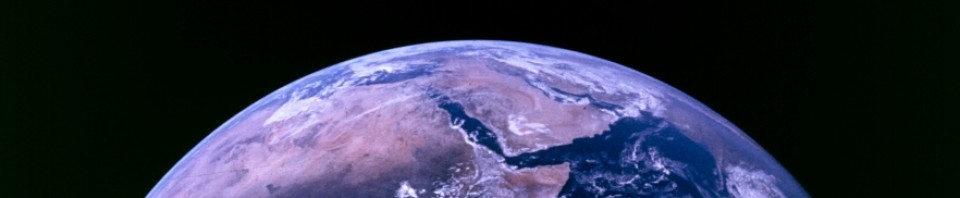
In a recent assembly at school, I read out a post from a blog written by Luca Parmitano, an astronaut with the European Space Agency currently serving on the International Space Station. Entitled EVA 23: exploring the frontier, it can be found on the ESA website and recounts in gripping detail a spacewalk that did not go to plan, with near fatal consequences. It was a sobering experience for all of us to hear it, and worth reflecting for a moment on why, despite the dangers, we are drawn irresistibly to the notion of space exploration.

An estimated 600 million people watched the first moon landing on 20 July 1969 – a world record until 750 million people watched the (then) fairytale wedding of Prince Charles and Lady Diana Spencer in 1981. Landing on the moon was fraught with danger and was a first for humanity; both of these are compelling reasons for people to watch, entranced, just as millions watched Felix Baumgartner’s skydive from space last year – we knew that this latter event was a stunt and that it was of huge benefit to commercial sponsors, but we watched anyway, holding our breath. When the Virgin spaceship takes off sometime next year, having just passed the latest stages of its technical development, queues of people will be waiting to take up the opportunity.

We are fascinated by space: each year, blockbuster movies (the latest being Oblivion) make us ask the as yet unanswered questions about whether there is life beyond the bounds of earth. Space offers us the sense of the unknown, and potentially of the unknowable. As humans, we struggle with this; whether this be down to our pioneering spirit or our arrogance, we are affronted by the sense that we do not and may not be able to know what is ‘out there’. Luca Parmitano reminds us in his blog that space is harsh and unforgiving, and that we are minuscule dots in comparison to the vastness; this challenges us at a deep, almost primal level.

We are drawn as a race to the pushing of frontiers, and space represents an enormous frontier still for us. We should not allow it to distract us from the frontiers remaining here on earth – of poverty, of inequality, of conflict, of the environmental harm we are doing to our planet – but neither should we discount it. If nothing else, space reminds us that we are incredibly fortunate to be human, and we should not waste this great fortune. Perhaps we should remember, rather, that we owe it to ourselves and to the universe to make a positive difference with our lives …

Individuals making a difference – an Ascham Old Girl in Melbourne

With the buzz of last night’s moving Valedictory Dinner for our Year 12 leavers still ringing in my ears, and as our Year 12s prepare for their final examinations and for life beyond school, my thoughts turn to Old Girls and the enormous breadth of activity that Ascham Old Girls undertake. It would be impossible to select and describe a typical Old Girl; there are, though, many stories of incredible achievement and positive impact on the world.

Continuing a theme that runs through many of these blogs about how what individuals do can make a real difference in the world, I thought therefore that I would write today about the work of Kate Barelle and her partner in Melbourne. Kate – an Old Girl of Ascham – is a clinical and forensic psychologist with a fascinating CV; she is also one of the co-founders of STREAT, a food-focused social enterprise based in Melbourne. I met her in early August when I was visiting the city, and I was inspired by what I saw.

Fundamentally, STREAT is about making a difference in the lives of young homeless people, aged 16-25, who have multiple barriers in the way of allowing them to make positive change in their own lives. These barriers may stem from dysfunctional families, or from mental health issues, or from drug and alcohol abuse … whatever they are, they are hurdles in the way of personal success, and often these hurdles, without help to overcome them, can seem completely insurmountable. STREAT offers programs to train young people in the hospitality business; the profits from the cafes and coffee cart that they run are fed back into developing the programs. With careful oversight, nurturing, further program and not a few risks along the way, STREAT is proving extremely successful, and as each cohort moves through, and feeds back into both the enterprise and the wider world, so the success proliferates.

You can read about STREAT here. The personal link through our wider Ascham community aside, it is an inspiring story, because it shows what individuals can do to make a difference. It shows how ideas formed in other parts of the world can be creatively adapted to form the basis of projects closer to home. It shows how the human spirit is indomitable and how belief in this spirit can transcend difficulty.

We can learn an enormous amount from the lives and works of others; let us always keep our eyes open to what is around us, and we will be inspired ourselves.


Walking the world and keeping up the pressure: looking ahead to the International Day of the Girl

As has been well-documented in this blog, Thursday 11th October 2012 was the very first ever International Day of the Girl. It was a day that was celebrated across the world; in its honour the London Eye turned pink, as did the Eiffel Tower and the Pyramids. Plan, the international children’s charity instrumental in making the day happen, led a series of activities across the globe to celebrate, including in London, and I had the privilege to be there, as did some of my girls from my then school. After an early morning start on the London Eye, where the girls met inspirational women and were ‘speed-mentored’, they gathered in London’s Festival Hall to hear girls from the developing world explain why an education is so important to them and to their communities, and to hear what hurdles – poverty, violence, early and forced marriage – stand in their way.

It was a very special day – eye-opening for the students and a revelation to many about the circumstances in which millions of girls in the world are growing up. They heard and took on board the message that for so many of their peers, an education is not a right or an expectation, and as a result, I think that they valued their own education just that (important) bit more.

But the message of the International Day of the Girl cannot be limited to the efforts of one day. The message was both the culmination of, and the very start of, a series of initiatives which have always been intended to be for the long term, uncompromising in their focus on a future in which all girls, everywhere, have the right to expect an education and the support of their community as they learn the skills that will allow them in due course to make a positive and significant difference to that very same community.

This year, on Friday 11th October, the second International Day of the Girl, we will be leading the world in walking the world to support Plan to raise awareness and money for the education of those 66 million girls worldwide who are denied access to an education. The circumference of the world is 40,075km; if 4008 girls join together and each walk just 10km, then we will have accomplished the feat of walking around the world. We are excited already.

Watch this video of the International Day of the Girl in London last year. It is uplifting and inspiring. And remember to keep your sights, too, on a future where the girl child is valued and honoured for the considerable value that she can bring to the world.


Protecting our young people from alcohol-related violence

UPDATED June 2020 – I received an email this week from Rehab 4 Addiction, with a link to their website. While not wishing to endorse the organisation directly, because I can’t speak for exactly what they do, I did think that the wealth of resources on their website was impressive, and – especially in this pandemic – I wanted to be of help. So, if you or someone you know are in need of advice on alcohol addiction, please look at this site 

It can often be tempting for schools to focus inwards – on the timetable, on academic examinations, and on practicalities associated with making sure that our students are well-organised and have everything lined up for them to take the next steps in their educational career. Good and great schools, of course, recognise that their responsibilities stretch far further, and we spend time focusing on the wider purpose of education, ensuring that our students understand that their role is to make a valuable and significant difference in their world and the world of others. In fact, I would argue that this is an incredibly important part of our vision for them.

Beneath this, however, lies an aspect of their education which schools must also not forget, and that is to teach our students – in partnership with their parents – to recognise and avoid the dangers they may encounter in their daily lives beyond the school gates. At the end of every term at Ascham, teachers reinforce with our Junior School girls what they should do when they are out and about, and how they can stay safe. Stay with parents, be aware … and if they are lost, turn for help to a police officer or (perhaps more realistically) a mother with other children. Through our personal development programs at school, we talk to the girls at every stage about keeping safe, looking out for one another, looking out for younger students, and being very, very aware of the dangers that exist, particularly those connected with alcohol and drugs.

Our role in schools is also one of advocacy, however, and we have a powerful responsibility – and platform – to make sure that we support and lead work that is being done to make a difference at a local, state, national and international level. I was reminded recently of this, and I was reinforced too in my commitment to seek to make differences in the world that will also protect them, as well as empower them.

In early August I was visited at school by the parents of Thomas Kelly, who was murdered in a central nightlife area of Sydney in 2012. Thomas, who was just 18, was killed as the result of an unprovoked alcohol-fuelled attack at around 10pm on 7th July 2012, which led to horrific and fatal injuries. His parents were forced to turn off his life support two days later. Since then, to honour their son and to prevent future tragedies, his parents have created a Foundation whose goal is to raise the issue of alcohol violence with Federal and State governments, and push for more proactive measures to make city streets safer.

Recent research reveals that each year in Australia, there are 70,000 victims of alcohol-related violence, 20,000 victims of alcohol-related child abuse, 14,000 alcohol-related hospitalizations and 367 deaths caused by the drinking of others. In the UK, research shows that an estimated 600,000 incidents of alcohol-related violence occur each year in and around licensed premises, and an estimated 19,000 alcohol-related sexual assaults occur each year in England and Wales. Very recent research conducted in NSW estimates the cost of alcohol abuse to be $3.87bn per annum. These figures are just a sprinkling of the figures available, and they focus not on the economic benefits of the consumption of alcohol, but rather on the human cost; but then, the human cost is what directly affects our children, and it is what we should be very, very concerned with as parents and as educators.

Mrs and Mrs Kelly have a mission: to tackle the alcohol-fuelled violence that has crept up into becoming the norm in our society. They are asking us all – individuals, communities, law-makers – to adopt zero tolerance for anti-social and violent behaviour. They are supporting education measures, preventative measures such as CCTVs, and legislative change around liquor licensing. Their personal tragedy has translated into a community mission, and their passion is inspiring. They are powerful advocates, with a simple message, and they have clearly made significant progress – progress which will help protect young people. I said that I would pass on details of what they are doing with their work, and this can be found on their website here. They are officially launching their Foundation on Wednesday 18th September 2013.

There are many people and organisations in our world working towards worthwhile and positive outcomes for others, and it would be impossible to support (or even list) them all. From time to time, however, there will be issues that we can and should share – and share widely. Our final year school students are amazing young people who have their futures ahead of them. We educate them, we give them boundaries; we can also stand up for their rights not to be exposed to danger.

As Mrs and Mrs Kelly put it, “The idea that a young man, with a bright future, could walk down a city street minding his own business and looking forward to a night out with some close friends and be dead from horrific head injuries two days later is simply not acceptable.”

They are quite right – and we need advocates for change.
What Every Parent Should Know About School: Book Review

The author of this new book, Michael Reist, has spent his working life in education – in schools for 30 years and then, for the last 10 years, in tutoring children one-to-one. There is no doubt that he is passionate about the subject of schools and their failings, and while the book reads in parts much like a treatise on how schools could and should be in an ideal world, discerning parents who care about what goes on in school will find much here to interest – and potentially excite – them about the possibilities that might exist in schools if we only put our collective mind to the subject.

The reader does not need to delve far into the pages of this book to understand that the author is deeply critical of the status quo that exists in schools. He describes them as a “hermetically sealed world” that is “not open to public scrutiny and certainly not outside criticism”. Principals of forward-thinking schools are likely to disagree with this appraisal; but then they, like I, will most likely agree with many of the points that Reist makes about the purpose of schools and the need for us to focus in schools on children, rather than on systems (including curriculum and assessment structures) which have been built up over the years into seemingly inviolable structures.

Schools, says Reist – and he is right – should be about serving two main interests: that of the individual, and that of the common good. “Next to the family, school is by far our most powerful and influential social institution”, and there is a need therefore for schools to be “intentional communities”, providing for a more “holistic and fluid” preparation for the future. In some ways he advocates a return to a common core in schooling, but in many other ways he is arguing for a radical (or perhaps not so radical, depending on your perspective) move forward: “The traditional model of the teacher at the front of the classroom will need to come to an end”. Students learn best, he writes, when they are given a voice and the freedom to choose their own activities; “If the curiosity of the child could be harnessed at an early age, the process of learning would take care of itself.”

We have heard this before – the progressive education movement in the early years of the 20th century taught us to place children rather than schools at the heart of education, and to focus on the unique abilities of individual children as worth nurturing and growing. Although the language in Reist’s work reads in places like an antagonistic call to arms (he even uses the term “a children’s liberation movement” in the latter chapters), his desire to engage parents is well-intentioned and right. His reasoning is sound, based as it is on the work of Dewey et al, which in turn grew into the practices seen today in many educational settings around the world, and lived, not least of all, in a Dalton Education.

Parents are right to want to know what is going on in schools, and the more they can learn about how schools work, the more they can ensure that they will play a valuable role in the shared endeavour that is the education of the next generation of our society.

What Every Parent Should Know About School, by Michael Reist, was published on 17 August by Dundurn. 

Telling the stories of our lives

I was very struck yesterday to hear how our visiting speaker at the senior school assembly described her job. Professor Mary Crock, Professor of Law at Sydney University, and a specialist in immigration law, described her work as the telling of stories about people’s lives, and said that she felt honoured to be working in a place which stood on a site where indigenous peoples had told and shared stories for thousands of years previously. She painted immigration law – both its use and its abuse – almost as a weathervane, indicating how a society functions, and emphasised the importance of people and their life stories within these structures.

She asked us all to stand up; those who had been born abroad were asked to sit first, then those whose parents had been born abroad were asked to sit, and then those whose grandparents had come from overseas were asked to sit. By this time, there were few – very few – left standing. The stories of these ancestors, and the journeys that they had undertaken, hung in the air.

Later yesterday I watched a series of amazing Year 12 drama performances that had been prepared for the HSC examination. The group performances were innovative and challenging; it was in the individual pieces, however, that I saw, picked up again, the strands of the same power of story-telling. Such was the strength of this story-telling that as an audience we were drawn, forcibly, into the lives of others – an autistic child dying of cancer, a French madam, a disturbed juvenile, amongst others. We were confronted, challenged, moved, repulsed, captivated … The power of the drama led us to experience a glimpse of different lives, different stories.

Each insight into these lives changed us slightly – it gave us an alternative perspective on the world, on history, or even on who we are. As we were wrenched from one life to another, made to see the world through different eyes, I was reminded of the words of Professor Mary Crock, and what they implied for us in this political age where it is easy to sanitise the world by parcelling people into groups – including asylum-seekers and refugees. I certainly can’t pretend to have the answer to the problem of the boats and the people-smugglers; yesterday, however, reminded us all in school that when we take the time to look inside people’s lives, and to appreciate fully who they are and how they view the world, this can create change in ourselves. Out of this change – who knows? – we may find our creative solution that ensure that the weathervane of our society is pointed broadly in the right direction.

I learn every day; it is a huge privilege to be sharing this and guiding young people on a great learning journey through their lives, as they write their own stories, and as they contribute to the stories of others.