Why every educator should visit Hiroshima

I know that travel is a privilege, and that time, cost, family and work responsibilities, and physical and mental challenges can prevent many of us from travelling. But I am just going to put it out there … if you can visit Hiroshima, you should. And if you think this does not apply to you, because I have put the word ‘educator’ in the title, then think again. We are all educators – of ourselves, and of the adults and children around us – through the example we set, the way we conduct ourselves, and the impact we have on the world. So … what follows is for everyone.

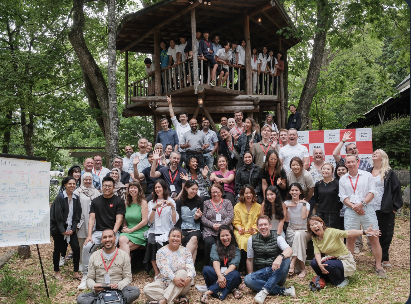
As I was already in Japan for the Hakuba Forum last week, I planned a day on Monday this week to visit Hiroshima. As those of you who have visited already will know, it is a clean, modern city, well-planned and well-constructed, with useful underground walkways and a very efficient transport system. In the middle, however, there is an enormous space – a huge, solemn and poignantly beautiful Memorial Park. This was once a thriving business district, until 8.15am on August 6, 1945, when the bomb fell; now, it reminds anyone who visits of the pain and sorrow experienced by the citizens of Hiroshima. It is a space that is irrevocably dedicated to the active pursuit of peace, through generating a determination to ensure that we all commit to this kind of horror never happening again.

The Peace Museum is confronting; it describes in traumatic detail the almost unbearable reality of what happened in Hiroshima. I found it intensely harrowing to read the stories of survivors and victims, told through pictures and objects that belonged to them; the message is conveyed simply and powerfully – these really were just ordinary people, caught up in a sudden, unimaginable event that blew apart their lives. The museum makes it clear without doubt that the victims were not abstract figures in a history book, but people just like you or me: parents at work, children heading to school, young people trying to figure out what the future might bring for them. What I had not realised before visiting was that, on the morning the bomb dropped, thousands of high school students had been mobilised, alongside other citizens, to create firebreaks throughout the city in case of air raids, and so they were busy demolishing certain buildings. This meant that they were therefore out in the open and directly exposed to the blast; of the around 8,000 mobilised students, nearly 7,000 were killed instantly or died soon after from their injuries. As someone who has spent much of their life working with teenagers, this hit particularly hard.

When you stand beside the twisted remains of the former Industrial Promotion Hall (which you will recognise from pictures as the Genbaku Dome or Atomic Bomb Dome), which is only a short distance from the Hypocentre of the explosion, you can feel the eerily thin line between past and present. You look at the warped steel and broken walls of the Dome, and are reminded that this was once an ordinary office building in an ordinary city, around which ordinary families, friends, shopkeepers, teachers, and children lived and worked. Note that the bomb that destroyed it had a yield of about fifteen kilotons of TNT; today, nuclear weapons exist that are thousands of times more powerful; even the reinforced concrete of the Dome would be pulverised if one of today’s bombs was dropped. The scale of destruction now possessed by the human race in its arsenal of weapons is almost incomprehensible – and that makes the message of Hiroshima all the more urgent. We have to find a way to create a lasting human commitment so that this can never happen again.

We have not done particularly well in this quest since the A bomb was detonated over Hiroshima in 1945. While nothing quite meets the instant destruction (and subsequent years of pain and suffering) wrought by the atomic bombs over Hiroshima and Nagasaki, countless wars have unleashed seemingly ever more sorrow. With geo-political tensions high, nothing feels more important at this moment in world history than that we forgive the past and move forward together – and that involves facing up to the past, recognising the harm that human beings can do to one another and to the world – and also realising and determining that we can make positive change happen, by starting at the roots of our behaviours, actions, beliefs and feelings.

Each of the thousands of historical micro-steps (many documented, many more probably not) that led to the bombing of Hiroshima in 1945 was an opportunity to stop, rethink, and regroup as a human race; while we see the bombing as inevitable with the hindsight of history, in actual fact, we undoubtedly collectively missed countless opportunities at the time to make change, and we have done so since. The opportunity to commit ourselves to a peaceful coexistence with one another and the planet is not lost, however, I firmly believe, but it will take discipline and persistence, in pursuit of seeking to do what is right for all of us. I am as certain as I can be that this can be achieved only by embracing our diversity and recognising our shared responsibility to one another; and in order to have a fair chance of doing so, we need to focus and re-focus, every day, on this goal and be strongly reminded of what can happens when we don’t. This is where a visit to Hiroshima really, really matters.

On the Saturday before travelling to Hiroshima, I was part of a panel at the Hakuba Forum Festival, alongside Governor Shuichi Abe of Nagano and Dr Kiyohiko Igarashi of Tokyo University, chaired by Tomoko Kumamoto, Founder of Hakuba International School on the theme ‘Restoring Trust in Divided Times’. The conclusion we reached was simple but profound: if we are to restore trust, we must focus on building good people – and commit ourselves to behaving, thinking, and feeling, with the best interests of our fellow human beings in mind. This message, and the message of Hiroshima, is not one of vengeance or anger or retribution for wrongs done in the past; rather, it is a message of simple, constructive peace, which starts with the self. This message reminds us that peace is not built solely on political treaties but on the daily practice of decency, curiosity, humility, and compassion.

For an educator – or indeed for anyone who is in a position to shape the minds or hearts of others – this message deepens our sense of responsibility for the stories we tell and the values we transmit, and it compels us to ask how we model empathy, how we nurture global awareness, and how we help young people see beyond difference. It calls us to teach history honestly and courageously, but above all to teach how to be good humans – and how to help others understand that compassion and forgiveness are choices we must make every day.

There are other places in the world that hold similar weight to Hiroshima, I know – far too many sites of human tragedy and reconciliation, of loss and of learning. We do not have to look far to see this unfolding under our eyes across the world, now, still. Visit some of these places if you can, because they change you. They are places of intense sadness and grief, but they also spur in you a belief that hope and action matter, and that from the ashes of destruction can rise an intense determination to do better, starting with each and every one of us.

So – if you can visit Hiroshima, you should, not simply to witness the past, but to take its lessons into the future – into classrooms, workplaces, communities, and families. Read those stories and feel the weight of the horror. And then translate your sorrow and horror into a renewed and loving imperative to do your bit to make the world a better place – and to teach and guide others to do the same.

It is, after all, up to each of us …

More than a braid: a metaphor for learning

As most readers of my writing will know, I do not normally post pictures of my hair online. I am not a ‘content creator’ (aka ‘influencer’) in the making, although I will confess to a desire to use the platform I have to make a positive difference in the world through challenging and supporting leaders to think ambitiously about their students, education, and the future of the world. My hairstyle, however, is not normally on the agenda, but I am making an exception today, because this photo that you can see is of more than a hairstyle – it is a photo that embodies a metaphor …

Those who know me will recognise immediately that this rather fetching style is not my customary look. The braid came about during a meeting of senior and executive leaders at Dalton School Hong Kong, in early September, as we worked together in person to prepare for an evening with parents to introduce new senior leaders to the community, and to talk about the exciting and powerful steps the school is taking as it moves into High School, honouring the vision of the Founders by developing a strong portfolio-based, dual language education. As we were all discussing how we should communicate ourselves on stage, and played around with various Dalton-themed props, one of our amazing leaders jumped in spontaneously, and redesigned my hair, to demonstrate in practice what could be, if we only thought differently.

I am, admittedly, only just writing about the experience now; life has a habit of crowding in, and as I pause in Doha airport on my way back to Edinburgh from Saudi Arabia, after a super 3 days challenging and supporting the senior leadership team at the British International School Jeddah, I find myself reflecting with energetic delight on the past few weeks. That particular meeting in Hong Kong remains vivid in my memory, not for the detail of the agenda, but for its atmosphere – it was suffused with laughter, with creativity, and with a refreshing sense of spontaneity. We achieved what we needed to, of course; the manner in which we achieved it, however, felt just as important as the outcome itself.

And this is where the braid becomes a metaphor. Education, like my hair that day, should be a process of weaving – delicate but robust strands brought together with patience and attentiveness; a pattern prompted by a need, and then drawing on the expertise of others around us. The outputs of real education form gradually, often unexpectedly, and always, always, with scope for individuality. The final braid, neat and pleasing, is worth having; it is the act of braiding, however – and the ‘why’ that lies behind it – that truly matters. The shifting of strands, the interplay of hands, the moments of amusement and surprise as something takes shape … these are what give the outcome its meaning.

Great schools, at their best, embody this spirit. They are places where process and outcome are not in competition, but in conversation; places where laughter and spontaneity sit comfortably alongside rigour and planning, and where the joy of learning is allowed to coexist with the seriousness of purpose. This is what makes education transformative – not the lovely neat braid itself, but the shared experience of creating it together. It is a genuine honour to be part of this process!

For in the end, education – like a braid – is most beautiful when it remembers that its strength lies in the weaving, not merely in the finished form. Perhaps we should reclassify education as a verb, not a noun … in any case, our task as educators is to look beyond … so, onwards and upwards together!

Do plants ask for help?

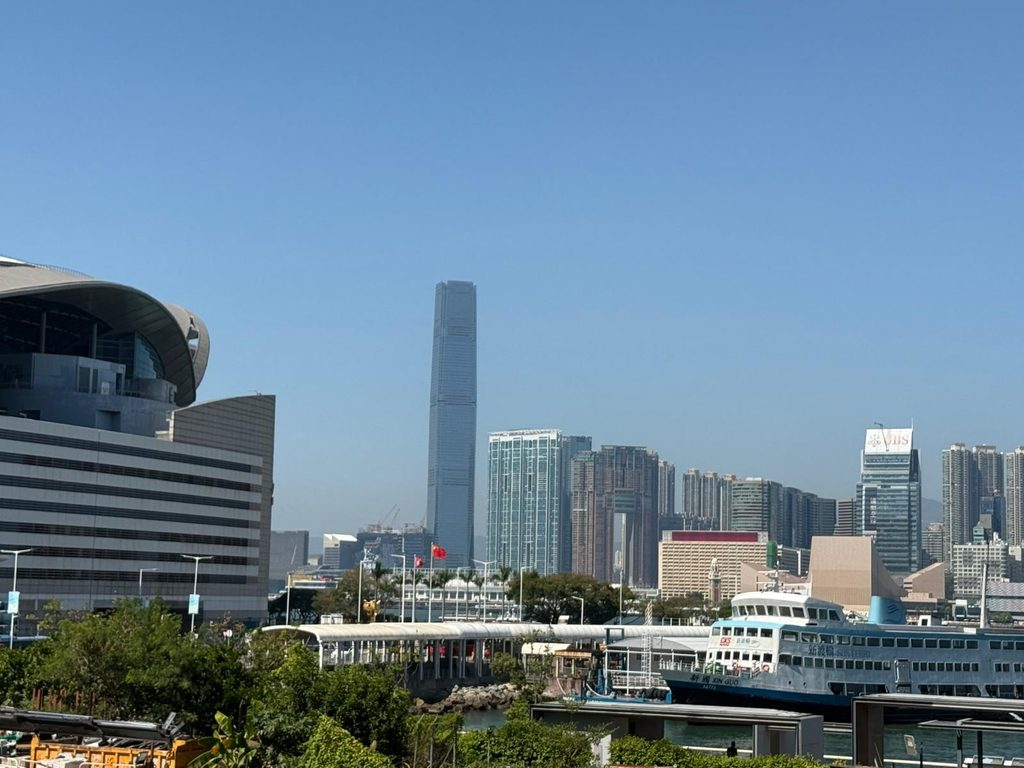
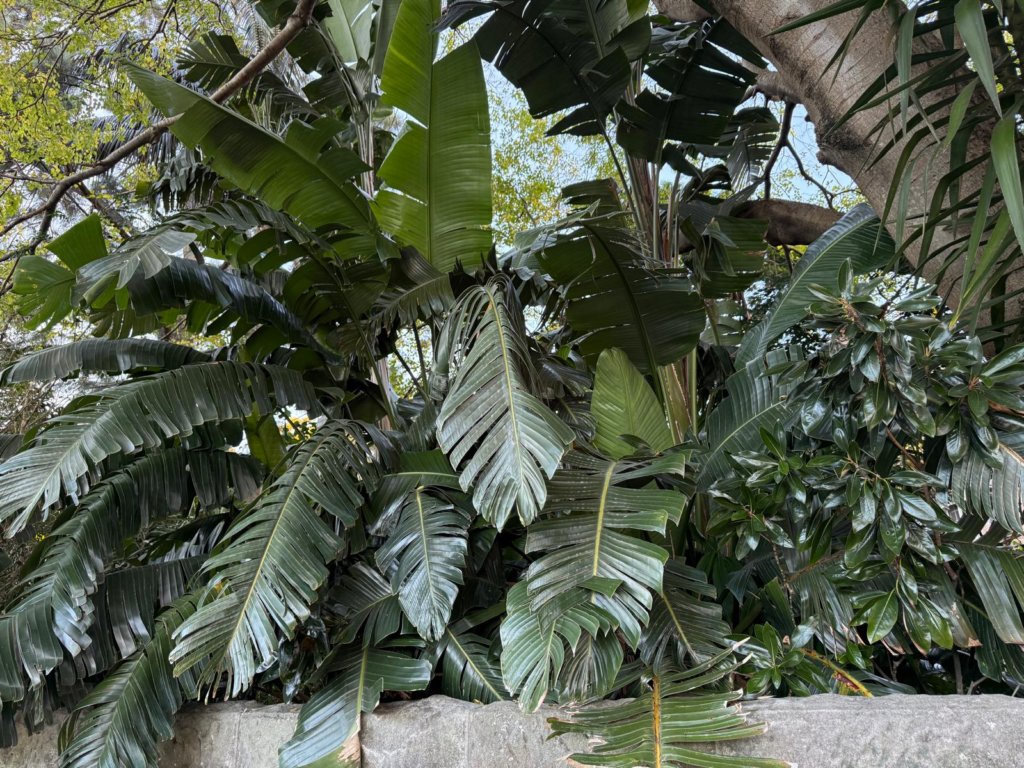
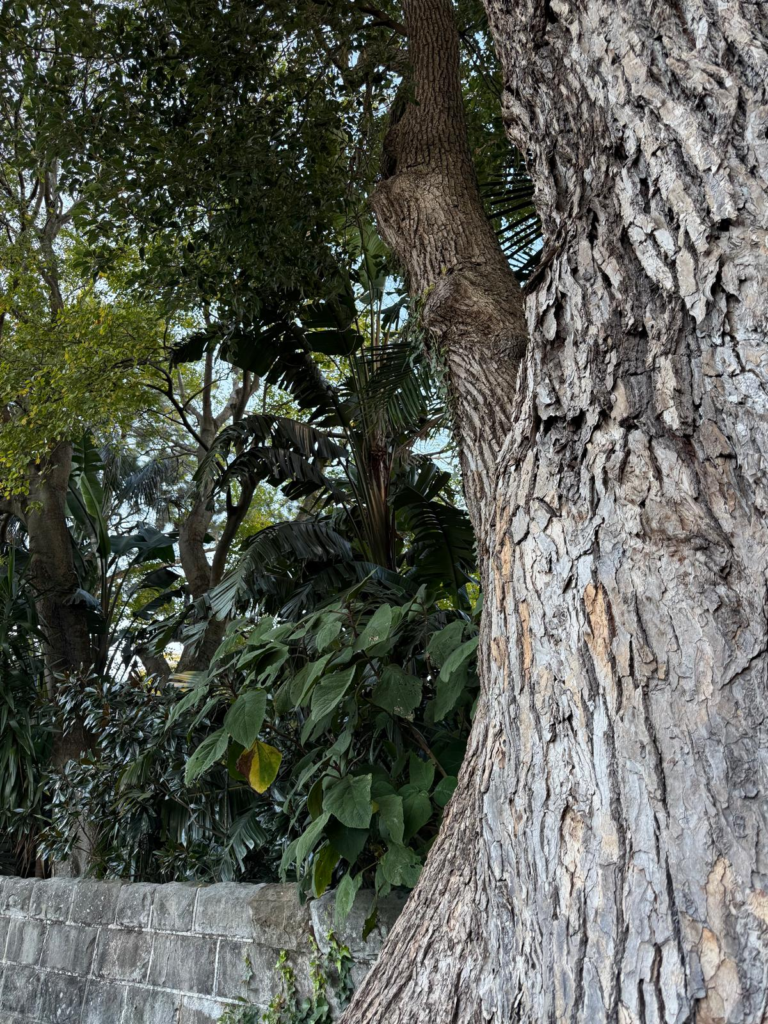
On my travels again over the past couple of weeks, I have been struck once more by the astonishing variety of vegetation in our world. Last week in humid Hong Kong, dodging astonishing thunderstorms and black rain, I paused to admire the massive fig trees which cling to walls and slopes, their aerial roots cascading like curtains. This week, in oven-like Dubai, sturdy palms and succulents stand testament to survival in arid heat. Next week I will be back in Scotland, a country which cannot decide whether it is hot, cold or wet … There, the greens therefore are lighter and gentler, and mosses and grasses spread across damp stone walls and into pavement cracks. Different continents, different plants; yet all of them thrive in their own way, in their own place.

View of trees on Hong Kong Island, taken from a window of Dalton School Hong Kong

Looking at this richness, I found myself idly wondering yesterday whether, when buffeted by the elements — especially in an age of increasingly extreme weather — plants are able to ask for help. They cannot uproot themselves and relocate to a more welcoming environment; they must endure where they are planted. But what happens if they are suffering and cannot get what they need? A rabbit hole of research later, I discovered what plant biologists already know: it turns out that plants do have ways of signalling their need.

When under attack, for example, some plants can release invisible chemical messages into the air, warning their neighbours of danger, and prompting them to strengthen their own defences. Beneath the soil, plant roots can link with other plants through fungal networks, sending coded signals and sometimes even receiving nutrients from stronger companions. Electrical pulses can travel across the leaves of some plants to carry a message of distress to other parts of the plant, triggering systemic protection. Some plants even change colour or form when stressed, deterring predators or attracting allies. It may not be communication as we know it, but it is unmistakably a call for support — and more often than not, the call is answered. How amazing is that?

And this, in turn, made me wonder about leaders. Do leaders ask for help enough? Leadership is hard; it requires energy, resilience, and constant attention. Yet so many leaders still see it as weakness to admit need. They push through alone, sometimes to breaking point, with all the damaging consequences for mental health that this entails. Importantly, ‘complaining’ is not the same as ‘asking for help’. As plants demonstrate, asking for help is targeted, intentional, and directed towards the specific support that is appropriate in the circumstances.

If plants can signal for help – and if the world around them is ready to respond, and does – then surely we can learn from this. Asking for help is not weakness, nor is it a last-ditch distress flare that scorches those best placed to assist … asking for help is connection. It draws others into our circle of resilience and ensures that we can continue to thrive where we are planted.

I very much believe that leadership, like nature, is an ecosystem. Leadership flourishes not in isolation, but in interaction – in networks of trust, generosity, and mutual response. Just as no plant survives without the soil, the air, and the unseen web beneath the surface, no leader thrives without acknowledging – and participating in – the interdependence offered by colleagues, systems, and structures. And thus the lesson extends: if even the silent life of plants shows that their need can be expressed and met, then we – agile animals and consummate communicators that we are – can surely ask.

Perhaps the real challenge is simply to trust that the world will answer … and to discover how much stronger we become when it does …

What have plants ever done for us …?

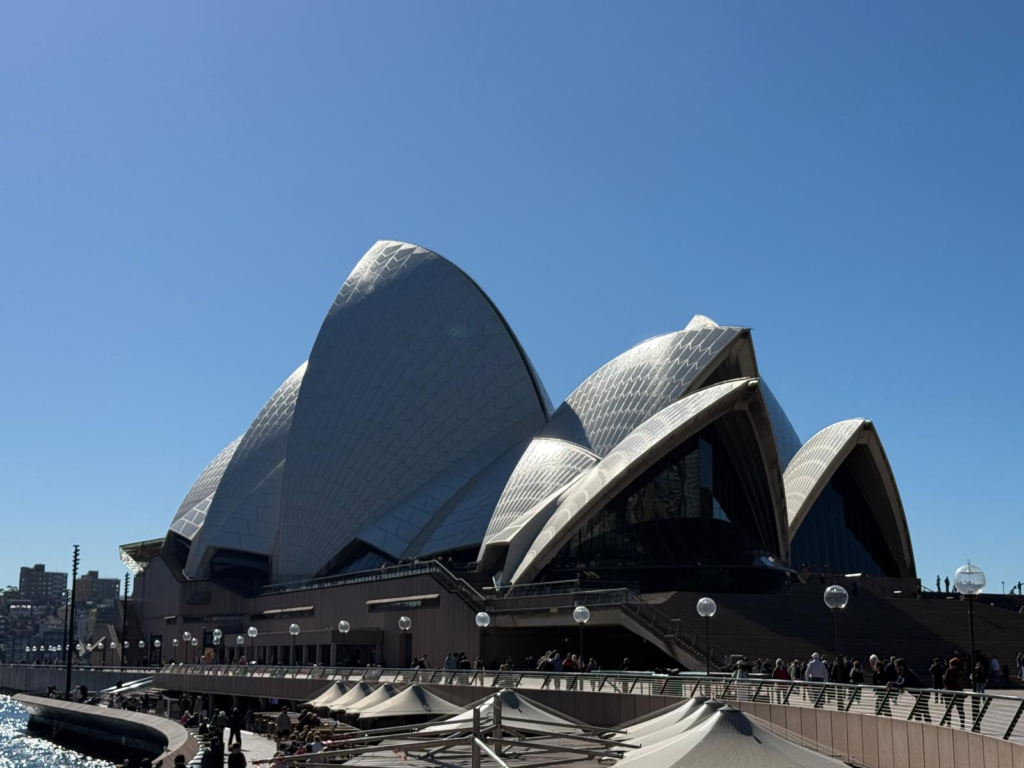
This week I am taking a break from the full-on coaching, speaking and advising of the past few months, which (since April) has seen me working with leaders and Boards in Shanghai, Jersey, Riyadh, Hong Kong and Hangzhou, with stops off at COBIS and IPSEF conferences in London in between; this week, by contrast, I am in Sydney, where I am catching up with a number of school leaders, and laying the foundations for some exciting new leadership team work in the region. And – as anyone who lives in or has visited Sydney will know – I do not have to go far in the city and nearby area to be surrounded by plants.

I love plants. I am not always as assiduous as they deserve in taking care of them at home; despite this, my study often resembles a mini-jungle, and I enjoy breathing in the oxygen that they produce, and watching their shoots emerge or retreat, as the seasons demand. Plants, I often say, are metaphors for the growth that occurs in the coaching process; being surrounded by them, I feel, is as symbolic as it is beautiful. Species of plants may vary from continent to continent, but their purpose and contribution to our world is the same.

So for anyone who ever doubted the power and benefits of plants, here is a short reflection on these quiet, resilient companions of our lives …

Plants hold space in a way that few other living things do; they simply grow, adapt, respond. They are a constant presence that asks for little more than some light, water, and the patience of time. In return, they offer us shade, beauty, nourishment, and a gentle but powerful wordless reminder that growth is always possible – even when unseen, and even when slow. Then, too, there is the ecosystem: plants do not thrive alone. They exist in interdependence with other plants, with fungi and pollinators, and with the air and minerals around them.

In essence, the same is true for leaders and leadership teams. Individual leadership growth is not usually a dramatic overnight transformation, but rather a slow unfurling, a turning of leaves towards the light, a shedding of what no longer serves, a rooting in deeper soil.. Moreover, the healthiest teams I have seen are not always the ones with the most striking blooms, but the ones which have quietly cultivated the conditions in which everyone can grow, with shared nourishment, mutual support, and space to breathe.

So many of the leaders I have worked with this year – across Asia, the Middle East, Europe and Australia – are navigating seasons of change. Some are budding with new opportunities; others are pruning back to essentials. The similarity with the lifecycle of plants is striking.

So as I spend this week navigating the parks of Sydney, admiring the fig trees, and marvelling at the vertical gardens that sprout from the very sides of buildings here, I find myself reflecting with gratitude on the lessons that plants keep teaching me – about hidden energy, resilience, rootedness, and hope.

Plants have long supported human beings – quietly, faithfully, without fanfare. As leaders, we simply need to pause long enough to notice … and learn.

On babies and governance

Travelling into London on the Elizabeth Line last weekend, on my way to the annual COBIS conference, I was sat opposite a baby, and I can honestly say that this was the best train journey I have taken in a long time; it was so enjoyable! The baby – probably, I would guess, aged 10 months or so – was on her mother’s lap, and as she interacted with the environment around her, she was – very evidently, and in rapid succession – possessed by a host of different emotions, from curiosity to delight, and from astonishment, through perplexity, determination, truculence and wonder, to sheer joy. When she saw a handrail, this baby wanted to chew it; when she spotted the floor, she wanted to stand on it; and when she caught the eye of a fellow passenger, she laughed out loud.

If you have forgotten how infectious a baby’s laugh can be, then take yourself out on public transport until you find a baby, and wait for them to laugh. Alternatively (and probably more practically), do a search on YouTube – I sincerely hope that the internet contains a whole section devoted to laughing babies. When you hear a baby laughing, you must know how impossible it is to stop yourself joining in; no matter the sadnesses in our lives, a baby’s laugh does its very best to assuage these. It is a joyous experience – a sense that in that moment, the universe is aligned, and the joy you experience in the fullness and completeness of the moment is amplified by the potential that lies ahead for that little human being, if they are nurtured well and guided wisely.

This baby on the Elizabeth Line was fortunate to have an attentive mother who gave her enough rein to explore, without actually letting her lick the accumulated germs on the seats around her, or knock herself unconscious on the nearby suitcases. Consequently, this little person was very evidently in the ‘growth zone’ between the freedom to learn and develop, and the safety of the boundaries that would ensure that she could come to no harm. She was neither let loose to roam the carriage, nor constrained in her buggy; her activity was purposeful, productive and in balance.

And it struck me – given that governance was on my mind on that journey to COBIS – that, in a nutshell, this balance between safety and boundary-pushing, is exactly what we want and need from governance. At the conference, I chaired a panel of esteemed governors from COBIS schools across the world, and governance experts, on the topic ‘Governors are Trained, not Born. Discuss’. Our aim was to explore and share experiences of best practice in training and developing Boards in the skills needed to fulfil their responsibilities, and we certainly did that; we also explored how good governance thrives. This is where the analogy with the baby struck me … good governance, like the baby, thrives best when there are clear boundaries, but with room to move within these, and encouragement to explore how to fulfil the challenging demands made of Governors, who have ultimate responsibility over schools, and who must ensure every plate is kept spinning, and every tightrope is walked with resolute confidence.

No-one is ever born a ready-made Governor, and even the most experienced of us must continue to learn, and keep practising the craft, if we are to be the best we can be. A shout-out, therefore, to all Governors; may your journey of learning about governance be as appropriately free and disciplined as that of the baby on Elizabeth Line, and may you – at least sometimes! – experience infectious joy in your work.

Whatever the question – the answer is more global competence …

Listening, last Monday, to former Estonian President Toomas Hendrik Ilves, as he gave a detailed and incisive lecture at the University of Edinburgh Law School, hosted by the Scottish Council on Global Affairs, I was struck by how – once again, it would seem, we have all failed to heed the lessons of centuries of history in Europe.

It was an uncomfortable – and at times even slightly terrifying – hour, as President Ilves offered a sharp, urgent reflection on how we have arrived— again — at a moment where war in Europe (which will inevitably spread) is not only possible, but threatened. His message was both subtle and clear: this has happened because we didn’t learn from history, and we didn’t take preventative action.

President Ilves was talking about defensive military and political action, and made himself very clear: we no longer live in a world where a balance between military superpowers guarantees the (relative) global stability that has sustained us since the end of the Second World War. The post-1945 order, and the assumptions of peace it allowed Europe to rely on, have fractured, and we must now imagine and invest in new forms of collective security – largely because of a growing misalignment (or, indeed, chasm) between how some nations view the world, and how they interpret the actions of other nations.

Personally, I really, really hope that President Ilves is wrong, and that a full-scale war of aggression in Europe can be averted… but rather than be lulled into a sense of hope that suppresses realism, I would like to advocate (again) for defensive action of a different kind – an immediate, universal focus in our education systems on the importance of global awareness, global citizenship, and global co-operation … all underpinned by the global competence that we need to learn if we are to become effectively united and connected as human beings – with different identities and backgrounds, but with enough of a shared understanding of what it means to be human. This global competence could perhaps be the most important set of skills that our children – and, quite frankly, all of us – need to adopt, urgently. This is a call to action …

If you haven’t read my book, The Globally Competent School, do so; and if you are in Shanghai on Saturday, I will see you at the China Festival of Education, at Wellington College China, where I am leading a workshop session on Global Competence (as well as being interviewed about coaching). It will be a thought-provoking day …

The core governance skill we should never forget

This is the time of year that I find myself immersed in budget discussions in each board meeting I attend, whether as non-executive Director, Trustee or simply as a governance coach/consultant. No matter where I am in the world, there are days at the moment when I seem simply to move from one meeting to another where I am diving into figures, questioning projections, challenging the data, and contributing to the prediction of scenarios and productive outcomes. I do enjoy this: these are intense sessions, demanding concentration, rigour and clarity; amidst the reading and interrogating of spreadsheets and forecasts, however, I am reminded of something much more fundamental – something which underpins all effective governance: the skill of thoughtfulness.

Governance, at its heart, is about making decisions that serve the best interests of an organisation and its people. And this starts not with talking, but with thinking: deep, reflective, considered thinking. Thoughtfulness in governance is not about hesitation or delay – quite the opposite. It is, I believe, about creating space to think carefully; it is also about drawing on our diverse backgrounds and experiences, pausing long enough to reflect, and allowing new conclusions – and sometimes entirely new ideas – to emerge.

This thinking process, of course, is not an isolated one. The next step in governance – and a vital one – is communication; we must be able to articulate our thoughts, share them with clarity, listen carefully to others, engage in respectful discussion, and ultimately work collectively with our fellow Board members to steer towards consensus. Without the foundation of thinking, however, the ship can very quickly go off course; good governance starts with – and is sustained by – thoughtfulness.

In a world that often demands rapid response and immediate answers, there is something profoundly powerful – even radical – about choosing to think deeply. Thoughtful governance sharpens our cognitive skills. It builds our astuteness, and tt feeds our understanding of the world and our place within it.

So, as I surface from another round of number-heavy meetings, I remind myself that the real work of governance is not only in the spreadsheets or strategy documents. It lies in the pause before the decision, and in the reflection before the action. It is in the space we create to think … and this something worth pondering upon.

Enjoy pondering!

The power of the question

Although I occasionally joke that my life would be much easier if I hadn’t taught my children the word ‘why?’, I am an enormous advocate of the power of the question. As a coach, or as a Board member, or as an interviewer, I ask questions every single day, and I know that the right question opens up avenues of thought, illuminates the unarticulated or hidden assumption, and can even shift the axis of understanding of the person for whom the question is intended. Good questions are transformative.

This is why I absolutely loved the opportunity I was given last Wednesday to be asked questions by groups of Grade 4 students at Dalton School Hong Kong, which I was visiting in my capacity as a Foundation Board member, helping to prepare for the final steps towards becoming fully K-12. These Grade 4 students were in the early stages of planning to set up their own businesses, and as part of their research had invited various Board members and local entrepreneurs to be quizzed on what works in setting up organisations, and what pitfalls they should be looking out for, as well as what motivated us personally, and why we had chosen to do in our careers what we do. Their questions were perceptive, and genuinely made us think; I came away from the session actually understanding even more about myself, as well as a strong sense of participation in the work of the children, and a connection with them – it was a mutual investment in a shared outcome.

This is the power of the question … but it is also the power of the education behind the question. The fact that these young students were able to craft these questions, and had developed not only a strong inquisitiveness and curiosity, but also with the ability – even at their young age – to focus and direct questions, to unearth deeper truths, was not the result of chance; but rather the outcome of the education they have been experiencing over the past few years. I have had the honour of being associated with DSHK, and its vision of a student-centred, dual language, future-ready education, since its inception over a decade ago, and the reason why it I see it as such a privilege is because it is evident that the school is genuinely pushing beyond the limitations imposed by national curricula, to expose children to opportunities for learning and growth that will ensure – absolutely ensure – they will succeed in the future that awaits them.

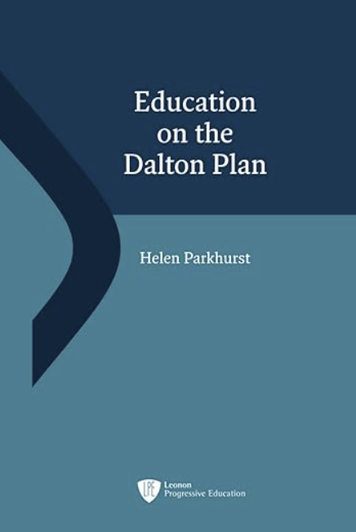
Dalton Graduates – just as envisaged by the founder of the student-centred Dalton Plan, Helen Parkhurst, over a century ago – will have necessary diplomas and qualifications, of course; much more importantly, though, they will actively have developed the human skills that will be essential in our new world. This is a world that is fast advancing – where automation extends far, far beyond anything we could have imagined even a few brief years ago – a world where Large Language Models can take over much any repetitive task – and many creative ones too. Jobs that have been the goal of professional ambition for centuries will, quite simply, no longer be needed. As Professor Po-Shen Loh reminded us at the Dalton Speaker Series Event recently, however, what AI cannot do is be human, and what the students at DSHK are learning is the range of skills that only humans can learn, to build their connection with other humans.

Hence the power of the question – if one of the most important skills our children need to learn to be successful human adults is to connect with others, then the right questions, to prompt connection, are arguably one of the most powerful tools they can develop. Worth remembering … and so … the question is … what are you going to do about it? If you are in Hong Kong, do visit DSHK – a warm welcome (together with curious questions) awaits

Lessons from the Seoul Metro

Arriving in Seoul for the Second WISE (Women in International Schools Empowerment) conference this weekend – which I am VERY much looking forward to! – I set off early this morning for a ride on the metro. I will confess that it took me a number of years of international travel before I could comfortably embrace the challenges of travelling on the metro/underground/subway in a new city, but once I did, I find myself inexorably drawn to this mode of transport almost as my habitual starting point in any new city.

The metro system in any city provides, I believe, a fascinating intersection between the familiar and the strange for the traveller – an intersection that is thrilling and daunting in equal measure. ‘Familiar’ includes the concept itself of a mass transit system, and practicalities such as the need to buy a ticket to travel, and the need to present the ticket at an automatic gate in order to access the system; ‘strange’, on the other hand, might include the history of the development of the system, as well as the means by which the ticket is purchased, the various rules around what kind of ticket can be used and when, and how to present it at the gate efficiently, without creating a blockage in the queue behind – all of which is gloriously overlain by the instructions in a language different to one’s own (even if English is frequently used on signage in major world cities).

The ‘strange’ is often subtly strange – where to stand, what side of the escalator to use, what expectations of behaviour exist, and how people navigate the space. The strange is why I go to the metro, rather than default always to private cars to take me around from place to place in the cities I visit. It is humbling to experience the helplessness of not knowing where to go, or how to get there, not matter how well-planned the outing through the prior study of guidebooks and metro maps. This helplessness is a reminder to us all that when we experience things for the first time, and often subsequently, we need guides to help us … and also that we can very much learn from those around us, as long as we know that this is how we will grow in our understanding. Humility underpins learning, after all, and one of the dangers as we grow older is that we lose our humility because we surround ourselves always by the familiar. As educators, the sharpness of humility and helplessness connects us with our charges; arguably, it is a necessity of our craft.

When I go to the metro for the first time, I watch people intently, so I have a better idea of what to do, and what is not acceptable. Without them knowing it, they become my guides; watching how they navigate the space reveals unspoken rules and shared courtesies—it is akin in many ways to an intricate dance of social harmony. I am fascinated, too, by the safety videos on various metros, and as I gaze at them, often in perplexity, trying to work out what the cartoon character host is seeking to communicate, they remind me that there are many, many more social norms that I have yet to understand in a different culture. When we travel, we must never take for granted that what we know, others know, or vice versa. It is one of the fundamentals that connects us across the world – our sameness and our otherness.

The strangeness of the metro soon dissipates, as journey layers on to journey, but the delicious feeling of taking the plunge of courage into exploring that intersection of familiar and strange, lasts longer. It is a privilege of travel.

Buses, though … they are a more extreme kind of strange! Metros, at least, have fixed start and stop points, run on fixed rails, and operate according to standardised rules which, once identified, tend to be well-replicated; buses run much more at the whims of their drivers, and have a whole set of different – and differing – rules.

More courage – and heaps more humility – is needed to tackle buses … Onwards and upwards, though!

Brainstorm: explosion, creativity and adolescence

The student performances at FOBISIA conferences are always excellent and this year’s performances at the 31st FOBISIA conference in Bangkok this past weekend more than exceeded expectations. The harmony of a school chamber choir, the fluid elegance of a school dance society … and then there was a duologue performed by two students from St Andrew’s International School Bangkok, which was so powerful that it literally brought me to tears.

Why? Well, the duologue was introduced as the outcome of work that students at the school had done in conjunction with an external theatre company based on the concept of the play ‘Brainstorm’. To sate my immediate hunger for more information, I delved into the internet and discovered that this is more than just a play – it is, in fact, more of a framework for the elucidation of the personal experience of a cast, although there is also an original play script which has been performed at the National Theatre in London, and which can be can be performed by schools. The whole point of this dramatic project, however, is not just to replicate what others have done, but to illuminate and explore the unique and wonderfully complex, evolving brains of the teenagers who are performing – brains which are not ‘broken’ but rather glorious in their ‘exhilarating chaos’.

People who don’t work with teenagers often misunderstand this period of human development – probably because they have forgotten (or suppressed the memory of) what it was like to have the brain of a teenager, where ‘86 billion neurons connect and collide’. With so much happening in the teenage brain, it is little wonder that the ability to act and communicate in a ‘conventional’ manner can elude teenagers, but rather than become frustrated if adults embrace this process they can gain glimpses into the amazing phenomenon that is the inner world of the adolescent – a place that is arguably one of the most creative places to be on this planet.

Teenagers care … they really, deeply, acutely care. They care about the world and (even when we can’t see it) they care about us, the adults around them. To assume that they don’t is to do teenagers a grave disservice, and fail to afford them the respect they deserve for navigating everything that is happening in their environment and their bodies, their emotions, their minds and their brains. What is so beautiful about ‘Brainstorm is that it enables teenagers to give a glimpse into their world and hear their thoughts, their raw love and their wisdom.

The emotion was strong, hence the unleashing of the tears. No parent or educator could fail to be moved by the silent reminders, spelled out in written words on the stage by the two teenagers we watched and heard that reinforced their love for their parents, their need to be alone at times, and their reassurance that they’re going to be okay.

I was speaking at FOBISIA on maximising diversity of thought in leadership teams, and I was part of a panel which explored how women leaders still need to work to change perceptions and secure their seat at the leadership table. My reflection after experiencing ‘Brainstorm’, however, was that in order to solve either or both of these problems, or the other issues raised at the conference, we could all do a whole lot worse than listen to the insights of the world’s adolescents.

They – and all of us – deserve their input.