Unleashing the power of your teaching faculty

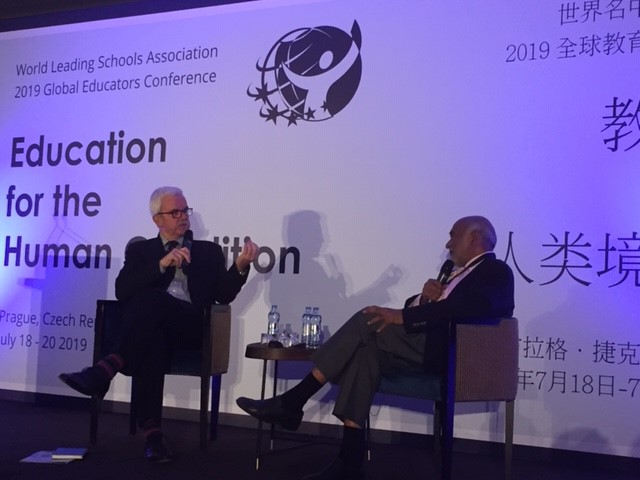
It was a huge pleasure this past weekend to chair one of the panels at the World Leading Schools’ Association (WLSA) in Prague, and I want to say an enormous thank you to my wonderful fellow panellists: Teresa Blake (Director of Social and Emotional Learning – Positive Education at Appleby College, Canada), Michelle Quinton (School Director, Korea International School, Pangyo) and Berry Bock (Director of Operations, Montessori Schools, Netherlands) – you were fab!

Our theme was ‘Releasing the Potential of Your Faculty’, and was designed to share stories of some of the forward-looking practices currently employed by schools across the world to empower and develop their teachers; each of us brought a different perspective, but we had a passionate belief in common – that when teachers in schools are invested in, children benefit. We heard about a whole school approach to social and emotional learning, which involved supporting and growing staff first; we listened to a compelling argument for utter clarity in the hiring process when recruiting teachers, to ensure that teachers would be able to thrive in a school which was a good fit, and where from the outset they were encouraged to think about focusing on their legacy in school; and we were impressed by the dedication of teachers who were motivated to spend up to 10 extra hours a week re-learning how to learn, and how this was having an impact on the structure of the whole school programme for students as the work of these teachers challenged the assumptions that underpinned the existing curriculum. Time and again, in the conversation and in the ensuing questions, we recognised that if we are to have truly inspirational schools, then we need to support teachers in learning that is as closely matched to their needs as possible, and it was gratifying to hear on several occasions about the value of coaching – I firmly believe, as you know, in the power of coaching to take teachers and leaders (and, in fact, teachers through the work of leaders) to the next level in their understanding, competency and vision.

Key messages to emerge out of our vigorous conversation (which, incidentally, we could have carried on for hours with the help of the very engaged audience!)? I would summarise these as follows:

  • schools need to spend as much time thinking about the learning of their teachers as the learning of their students … and in fact, the lessons we have learned over the years about what assists effective learning in students apply (unsurprisingly) equally to teachers, so let us employ these;
  • schools will benefit if they are clear about their vision, and therefore what they are looking for in teachers to help create teams who have a shared direction of travel in their professional development as well as the desire to explore their individual pathways;
  • schools should be bold, and make it highly visible in the community that they have an active professional development programme – how else can we make it clear that this is a learning community?

Above all, the clear message to schools and school leaders was – invest in teachers. Just do it. It matters, and it works. And when you do, you are contributing to excellence in the world; because when teachers move on and to different schools, as we hope that they will in time, for their own sakes as well as for the benefit of their future students, they take their learnings with them, and they grow in skill and influence, with the opportunity to make a difference to even more lives, because of the work that you have done with them. Together we can make a difference – and there are many, many schools out there already heeding this message. Thank you!

Celebrating difference: people of determination

For a number of reasons, which would take too long to explain just at the moment, I have recently been researching and learning a lot more about autism in girls, and I have a number of observations.

First, there really is an inequality in how autism is understood in girls when compared to how it is understood in boys. One of the most common frustrations that parents of girls with autism report is how their daughters can easily be dismissed as not being autistic simply because they can look others in the eye and/or demonstrate empathy. Even medical professionals can be guilty of the assumption that ‘eye contact = not autistic’; no wonder vastly fewer girls than boys are diagnosed, if they fall at the first hurdle of referral. A little learning can be a dangerous thing in this respect … a couple of PowerPoint slides at a training day can give people (including, it must be said, teachers) the apparent confidence that they understand autism, but this certainty is most likely misplaced.

Secondly – ‘masking’ (when a child hides her feelings) can appear on the surface (no pun intended, here) to be one of the best things that an autistic child can do, because it allows them to ‘fit in’ and do what is ‘normal’ or ‘expected’, but in the long term (and often even in the short term) it can actually be one of the worst. This is because (a) it means that the uninitiated or unaware (teachers, relatives etc) remain oblivious to the real feelings and perceptions that the autistic child is experiencing; (b) the mask cannot last forever, and at some point these feelings will explode, often with trusted adults at home, who then have to bear the burden of this; and (c) when the masked feelings do emerge in other company, it can lead to utter perplexity and ‘shut down’ responses from the adults around (eg ‘you can’t behave like that’) which further alienate the autistic child. This latter point is particularly exacerbated in responses to girls who have meltdowns because, still, ‘girls aren’t supposed to behave like that’. Sigh.

Thirdly – and this is really important – practically everything I read about autism represents autism as a deficit life situation. I have even seen it described as ‘life-limiting’ or ‘limiting life chances’. Given that we are (finally) coming as a society round to a better expression of tolerance for others in a much, much broader sense, then why are we stuck in a negative rut when it comes to neuro-diverse children (or adults, for that matter) … especially when (to my still relatively untutored eye) it seems as though practically every autistic person I meet or hear about is uniquely special, just as every child is? Creativity, focus, insightfulness, honesty, straightforwardness … take your pick! I sometimes wonder whether the world might actually be a better place if neurodiversity was actually more common than being neurotypical …

As I ponder this, I reckon we still have a long way to go before we can actually dismantle the bastion of fairness and discrimination that has been erected around autism – in girls, especially. This means that in the meantime, autistic children and adults are going to be bearing the brunt of having to work harder to carve out the roles in the world which they deserve.

I recall being in Abu Dhabi earlier this year, at the same time as the Special Olympic Games, which were branded the Games for People of Determination… ‘Meet the Determined’ was the slogan on all the posters. This is part of a wider strategy in the UAE to support difference, and it was incredibly heartening to see signs around that linked a traditional ‘disabled’ wheelchair sign with the concept of determination. How refreshing!!

Somehow we all have to grow up a bit in our understanding of what autism is, and what ‘difference’ means … after all, if we are all different, what is ‘normal’? And if ‘normal’ is so hard to define, why do we keep expecting people to be it? Let us embrace diversity, recognise that different people have different needs, and genuinely help one another to find ways in which we can live together more equally.

And a good start would be to challenge our negative assumptions about autism in girls …

Swimming With Men

If you have followed this blog over a number of years, then you will know that my movie-watching habits are limited to occasions when I travel on long haul flights. I cannot claim, therefore, to be anywhere approaching a seasoned critic or an aficionado, but I do usually find one or more films which make me reflect on important issues in the real world, and when I do, I like to share these thoughts. This is exactly what happened when I recently flew out to Asia, and I stumbled across ‘Swimming With Men’.

Starring Rob Brydon, amongst other recognisable actors – Rupert Graves and Downton Abbey’s Jim Carter, for example – this is the story of a disaffected accountant who stumbles across (and joins) a male synchronised swimming team. It is a humorous and honest reflection of the joys and tribulations of genuine male friendship, and was a light, enjoyable (and heart-warming) watch – well, I enjoyed it, anyway!

What I found particularly refreshing was the fact that this film just allows men to be men – not pitted against, or compared with, women; not denigrating women or trying to be better than women. If anything, it pokes fun at the ridiculous expectations that society makes of women – in one scene, for example, the men are relieved that they aren’t expected to wear the glossy makeup and smile of their female counterparts. And their (competitive and highly effective) coach is a woman who really knows her stuff. It was just so nice to watch something that was, quite frankly, normal.

Of course, the reason why this film is worth remarking upon is that it is unusual. The results of the Bechdel test regularly reveal that ordinary, fun female friendship continues to be un-represented in film. Sigh. Still so much to do in this world. Still, if Swimming With Men can be a success, then there is perhaps hope for us all.

Onboarding coaching – a vital part of a transition to a new international leadership role

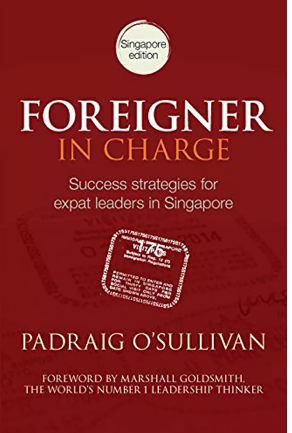
I recently picked up a secondhand copy of Padraig O’Sullivan’s book on coaching for expat leaders – ‘Foreigner in Charge’ – and although he wasn’t writing specifically about international school leaders, he might as well have been; his insights into the process that leaders go through when they move to new roles in new countries were deeply insightful. For a school leader who chooses to move overseas for the first time, or who moves from one international role to another, there are multiple transitions to navigate, and O’Sullivan’s very practical book lays these bare in a very user-friendly fashion.

A key factor into successful transition into a new role, however, as I have learned over the course of my career first as a school leader, and now as a consultant, is really good coaching. It often surprises me that while boards are happy to invest in the recruitment process for a new role, recognising the value of the expertise that executive search processes bring to ensuring the right ‘fit’, they are far less aware of the value of coaching for the new incumbent in the role. Sometimes this is because they think that they as a board are best able to help the leader settle into role, forgetting that they cannot provide the confidential space for leaders to explore and develop their leadership; sometimes they just assume that once the right appointment has been made, everything will just fall into place.

In actual fact, from the moment the appointment is made to the moment the leader takes up her or his new role – which in the case of international school leaders can often be several months – both the leader and the organisation will be shifting and changing, and without careful reflection and direction, this can lead to an unnoticed divergence of paths and perspectives. Add into the equation the fact that the leader will be faced with the need to learn and understand cultural norms and assumptions on top of all the interpersonal and structural norms and assumptions in the organisation, failure in any one of which could easily result in stormy waters, or even failure, with the significant financial costs and organisational disruption that this entails, then the engagement of a coach for the leader suddenly seems like a very good investment indeed.

I have been absolutely won over by the power of coaching to make a difference in the transitions that people make in their careers. I have experienced the huge positives myself as a coachee, and I can see exactly where I would have benefited in moving into other roles. I also see every week, with the leaders I coach personally, how transformative it can be for both the leader and the organisation to challenge, ask the right questions and set goals (and hold people to account for the actions needed to meet these).

Of course, when coaching works, ie when leaders are in happier places, and organisations work more harmoniously, everyone assumes it was always going to be this way … Little do they know!

Amazing libraries of the world!

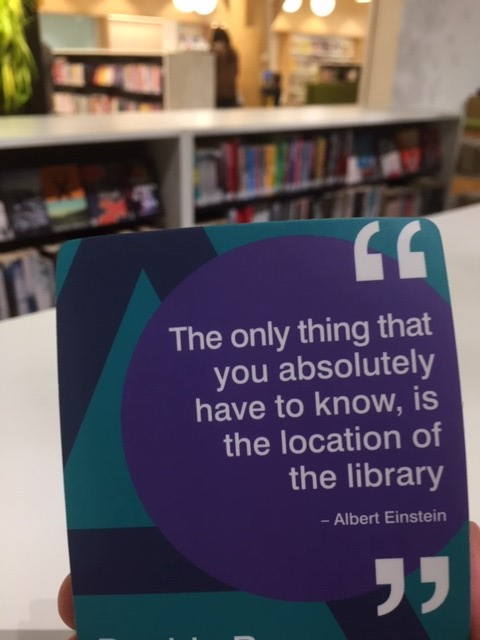
I spent time last week in a brilliant library – Double Bay Library in Woollahra, Sydney, and the experience was too good not to share. I had to find somewhere to dial into a board meeting in Hong Kong, and so I was on the hunt for good WiFi in the area – which indeed I found, but with so much more on top. I often say that I think schools should be at the heart of communities – well, so should libraries, and this one most definitely was. I have no idea how it was funded, nor what wasn’t built so that it could be built, nor how it compares to other libraries in the district or city (apart from the NSW State Library, which is fab) … I just want to celebrate what I found, and let others experience a bit of my delight!

Photo taken in Double Bay Library, Woollahra, Sydney

Opened in 2016, the library is spread over 3 floors and is marked by its hanging greenery, the multitude of different work spaces (including a stepped area which does dual duty as an auditorium), and what looked to my eagerly browsing eye like excellent children’s and adult fiction sections (I didn’t have time to look at the non-fiction section – this was at the very top of the building in the quiet zone). There was also an indoor slide for children … who would have thought that? The architects’ website describes it better than I ever could – with pictures – so check this out here – bvn website. They must have done something clever with the sound absorption too, because somehow, despite people talking and the fact that there were a lot of people using it, it seemed calm, yet warmly welcoming – a very facilitating place.

Anyway, what I really, really liked about this library was precisely the fact that it was being used! People were returning books, borrowing books, reading books, working on their laptops, researching on the many computers and iPads that were available, playing games in the Tech zone, and – essentially – engaging in lots and lots of learning. What a marvellous experience! Surrounded by and immersed in learning!

Abraham Lincoln is quoted as saying ‘All I have learned, I learned from books’. Today’s books are more than paper and ink (although nothing quite replaces the touch and feel of the physical object …) and civilised societies, which is what we surely aspire to be, are learning societies; societies which invest in learning and in libraries are wise.

Wouldn’t it be great if all our decision-makers had the same vision …?

Building intercultural confidence

A great day last Friday at the AIS Leadership Centre in Sydney, working with new Principals on how to enable their schools to become world leaders in the field of global education. It was gratifying to receive 5/5 ratings from all the participants (thank you!), but what really uplifted me were the ‘lightbulb moments’ that I witnessed, coupled with a determination to make sure that each and every one of their students was going to benefit from the thinking we had worked on, and the models which I have created, and to which I introduced them. What drives me personally is being able to have positive impact on leaders – and through them, young people – and Friday was a perfect example of how this can happen. Well done to the AIS for being so forward-thinking on behalf of its new Principals, in arranging this!

I was struck in particular on this occasion by how open these new Principals were to the thought that they could engage their communities in creating opportunities for their students. Working with – and shaping – the local, national and international community around schools is one of the key pillars of my focus in the schools with which I work, and I heard some brilliant examples of early-stage initiatives in schools run by some of these new Principals, which they were then able to share with their colleagues. All too often, schools feel as though they can’t ask for help from their immediate wider community, let alone a community that stretches far, far wider, but it is incredibly important that leaders do in fact have courage and reach out – only by doing this will they be able to provide the opportunities and pathways that their students deserve and need in a global world that is connected as never before, and where – as long as schools really, really prepare them to work interculturally – they will have amazing choices.

So – a huge shout out and good luck to all those new Principals who are either in their first year of leadership, or who are shortly to take up a new post. Remember to put the global at the heart of what you are doing in school, and you will make astonishing things happen. Go for it!

Dr Helen Wright is the author of Powerful Schools: how schools can be drivers of social and global mobility

Pointers needed! Game theory plus … what?

So … here’s my problem … and I need some help …

First, the background. Last week I attended a Maths Challenge certificate ceremony at Heriot-Watt University in Edinburgh, during which I had the enjoyable experience of hearing a lecture on game theory. As part of the lecture, we all pondered again the Prisoner’s Dilemma, and why it was always statistically better to cheat or betray to gain an advantage in a game. (If you don’t know the Prisoner’s Dilemma, read about it here; in fact, the rest of my own Dilemma won’t make sense unless you do.) Now, obviously at least one of the prisoners is still worse off if there is some betrayal than if neither prisoner betrays, but game theory explains, through an analysis of the statistical probabilities, why behaving in what the outside world might see as a less honourable way is often the ‘safest’ route for game players to take.

To be honest, at the time I enjoyed the intellectual challenge, and filed it (probably rather naively) into my ‘fictional world’ or ‘suspension of disbelief’ folder – an interesting question about amorality in the virtual world, but one which could be explored at a different time, and which might not in any case transfer to the real world. Then, however, on Monday, I realised suddenly that we need to take this a lot more seriously than I had thought. I was listening to a very different lecture in the Sheldonian Theatre in Oxford, following a board meeting, this time given by Tom Steyr, billionaire-turned-grass-roots-activist and arch-critic of the current political structure of the US, and he pointed out that in his opinion the behaviour of the current US President was a sign that he was trapped in the Prisoner’s Dilemma, choosing to cheat and betray his way out of situations because on balance, this made it more likely that he would win. This really, really made me think … I wonder how much of our culture is permeated by people consciously (or subconsciously, through imitation of others) employing the learnings from game theory. A simple Google search reveals hundreds of thousands of reflection and scholarly articles on the impact of game theory on war, politics and international relations. And my question is this – are we really turning into a society where cheating is the de facto modus operandi?

Well, I refuse to accept that this is either desirable or necessary – every ethical bone in my body screams otherwise – but what I could do with is some input from experts (amateur or professional) in game theory which will help me (all of us) understand game theory in practice in real life … Is there an equation out there that incorporates the multiple, layered and complex variables that actually influence how we can and should choose to behave in the kind of civilised society to which we aspire?

I’d love any pointers – links, thoughts or theories – that any of you might have … please, just get in touch. Where shall I start reading? In the meantime, I shall be busy resurrecting my school Scottish Higher Grade Mathematics in my spare time …

The (as-yet-unrealised) wisdom of Homo Sapiens …

Yuval Noah Harari’s ‘Sapiens’ has been sitting on my shelf for FAR too long, waiting, tantalisingly, to be read, but this past weekend I plunged in … and couldn’t put it down. I haven’t finished it yet – so, please, no spoilers – but given that there is a sequel of sorts (Homo Deus), then I am hoping it doesn’t end (yet) in total annihilation and catastrophe. As global issues become more pressing – as plastic waste builds up (and countries like Malaysia wake up to not wanting to be the dustbins of the world, and turn container ships back towards Europe), and as the biodiversity of our planet plummets – we really, really need to start considering the possibility that it won’t actually be all right after all, no matter how much we hope it will be.

In this window of time where we can choose still to hope, however, we can’t simply sit around and ruminate. Action is needed … and in this, Dr Harari gives us some direction. He deconstructs the notion of unique nationhood, and challenges what we mean by ‘Us’ and ‘Them’; moreover, he points us towards global solutions:

“The appearance of essentially global problems, such as melting ice caps, nibbles away at whatever legitimacy remains to the independent nation states. No sovereign state will be able to overcome global warming on its own… the global empire [is] being forged before our eyes”. (Chapter 11)

How, though … well, an uplifting meeting a cup of tea that I had earlier this week with a wonderful, highly experienced coach and change agent reminded me of the importance of dialogue, and it set me thinking about how we can more explicitly teach everyone (including young people – the future of the world) to engage in dialogic practice. We don’t have a lot of time, but we do need to do something. So another book is winging its way to me … William Issac’s ‘Dialogue and the Art of Thinking Together’.

Watch this space. 

Why choose to teach abroad?

Escaping (literally) from the turmoil of Brexit and the political machinations of the UK can appear a particularly attractive option at the moment. Although I have written in the past about why teaching abroad can be enormously beneficial, both personally and professionally, I thought it was an apt moment to recall why this is the case – especially because I was reminded at the recent Council of British International Schools (COBIS) conference in London very vigorously of the great opportunities for UK teachers (and others) that lie in cultures other than their own.

Last year, COBIS conducted a major survey looking into teacher supply in British International Schools and found that 94% of senior leaders in British international schools find it challenging to recruit the required quality of teaching staff; by implication, this means that the roles are there and waiting for highly qualified and proficient teachers. They also looked at the flow of teachers out of the UK and back into the UK, and found positive motivations underpinning each of these – a desire for travel and new experiences when going out, and a desire to come home and bring back knowledge and experience when returning. Teacher movement abroad is – happily for children in the UK – demonstrably not a one-way process.

Of enormous encouragement were the findings of COBIS about what teachers gained from their time working in schools in different countries: 79% felt that they had grown in cultural awareness, 76% felt that they had developed a global outlook and were more internationally minded, and 58% spoke of the greater adaptability that they had developed. What marvellous personal and professional outcomes! And how amazing if as a result of this personal and professional development, teachers – with their immediate access to young people – can be role models for global mobility!

Nothing beats travelling, working and living in a place other than one’s original home. Teachers have a ready-made pathway and opportunities just waiting for them. Seize the day …

Dr Helen Wright is the author of Powerful Schools: how schools can be drivers of social and global mobility

Addressing our assumptions

Two very different events which I attended at the end of last week in Edinburgh ended with a very similar message about the importance of getting to know the people around us, and I thought this was worth reflecting on for a moment.

The first event was a session on diversity – and, specifically, how we can deal with our unconscious bias, hosted for the Institute and Faculty of Actuaries (IFoA) at the offices of KMPG in the shadow of Edinburgh Castle. People from all fields of actuarial work attended, as did a number of connected guests (I was there because I chair one of the IFoA’s Strategic Boards, their Lifelong Learning Board), and the discussion was robust and at times (to quote the chair of the IFoA’s Diversity Action Group), “appropriately uncomfortable”. For there is, of course, an incredibly vast amount more work that we need to do as individuals and collectively to address the prejudices that we have, and the harm that these can cause; and we should not fall into the trap of feeling self-satisfied because we have a small level of awareness, or of assuming that we have ‘done our bit’ … learning to accept people for who they actually are is a lot harder than it sounds, and we need to work a lot harder on it.

This task is made even harder because, as we heard at the event, research shows that 61% of the workforce regularly engage in ‘covering’, ie covering up or hiding something that is important to their identity … and yet, the more we know about people, the more likely it is that we all understand them, and therefore the more likely it is that we will embrace who they are, and that our lives – and theirs – will be enhanced as a result. There are plenty of very good reasons why people ‘cover’ – through fear of being disadvantaged or ridiculed or hurt – and so therefore the message that emerged was the imperative of practising getting to know people, to give them places and spaces where they feel they can trust enough to talk more openly about themselves, and of accepting them for who they are.

The very same message emerged the next morning when I visited the Edinburgh Steiner School, set in lovely surroundings in South Edinburgh, and gained an in-depth insight from teachers and students about their particularly creative and grounder approach to education. They were calmly and confidently explicit about their intention to nurture a harmonious personality in children with all aspects of their character well-developed, resulting in confident, independent and self-aware young people. What was interesting, and what differed slightly from many other schools which I have visited over the years, it that this sense of self-awareness went far deeper than the individual; it has a purpose, best articulated by one of the current students, who delved deeper – “Steiner has taught me”, he said, “not to make assumptions about people but to find out about them, and stop and appreciate them.”

I have often thought that good schools have a lot to teach other professions about how they grow and manage people, and to hear the same message articulated in two very different contexts, but within less than 24 hours of one another, served to confirm this. More importantly, the message these events mutually reinforced is one that we need to act upon if we are going to have any real chance of drawing out the best of the human race in these challenging global times. So … at the risk of stating the obvious, be aware of the sameness and difference of others, and practise getting to know people (and not just people who seem like everyone else we know).

Above all, let us take responsibility and commit to making a difference. And do it today.