Ethnic diversity – starting young really does make a difference

An interesting report published by the Centre for Research and Analysis of Migration at the University of London caught my eye this week. This study of inter-ethnic relations between teenagers surveyed around 4000 Year 10 students in state schools in England, to explore the role that school and neighbourhood ethnic composition play in the level of ‘warmth of feeling’ that young people have towards different ethnic groups, and the results were very interesting. Not surprisingly, the study found that pupils have greater warmth of feeling for those from their own ethnic group, but what is particularly interesting is that the researchers found clear evidence that these young people feel more positive towards another ethnic group if they encounter more pupils from that group in school (more so than in their neighbourhood – something about the environment of school appears to facilitate this growth in warmth of feeling).

Globe in hands

In fact, the study showed that the warmth of feeling of a black student for white students increases by 1.04 points for each 10 percentage point increase in the share of white pupils in the school, while the warmth of feeling of a white student for black students increases by 1.74 points for each ten percentage point increase in the share of black pupils in the school. Put together, this has a cumulative effect: this means that the increase in warmth of feeling equates to a reduction of over 10 per cent in the gap between the warmth of feeling that students felt for their own ethnic group, compared to the other group.

The value of this research lies in the fact that it confirms what should be – if we take time to reflect on it – common sense about human relationships. In stronger terms, it is an essential human truth: when we spend time with people who see the world slightly differently to us, we learn to appreciate both them, and humanity in a broader sense, more fully. It should be obvious to us by now that walking in the shoes of others makes a difference, and that diversity is to be valued … sometimes, however, it takes a growing body of definitive research to make the clamouring voices so loud that they cannot be ignored.

This research is particularly heartening, of course, because it was done with young people, showing the shift that can occur with those who are the future leaders of, and contributors to, society. Although it would require further longitudinal research to see how this warmth of feeling persisted into adulthood, it would be reasonable to make the assumption that it had some positive lasting effect; teenage years, after all, are where so many values are cemented.

What to do with this understanding though? Although some may rush to insist on some kind of artificial social engineering in schools, we should be wary of rushing to close down schools rooted in their communities in favour of bigger, super schools, even though these by definition are likely to have more of an ethnic mix, and greater diversity, simply because they will draw children together from a wider geographical and/or socio-economic demographic. No credible evidence exists to support the value (other than financial cost-saving value) of larger schools.

What it does suggest is that schools need to be hyper-alert to the creation of opportunities for their pupils to build meaningful relationships with their peers from different cultures. This may be at a local level, building partnerships with schools in other parts of the town, city or region, enabling students to work together on projects and share purposeful experiences; importantly, it can – and arguably should – also include opportunities to work together and spend time with their peers who live abroad, and who have even more different backgrounds. Technology brings us many options in this respect; the most powerful opportunities will come, however, when creative educator minds focus on solutions, powered by a vision and driving sense of the importance of helping children connect with, and experience the lives of, people who are a bit different to them.

Internationalism, global outlook, and warmth of feeling towards others are all different aspects of the same fundamental issue that should be at the heart of our education systems and schools. We know what we have to do: let’s reach out and help our children experience and value the diversity in the world.

Read more: Powerful Schools: How schools can be drivers of social and global mobility

The Power of Quiet: focus and extraordinary personal development in a school in Forestville

This week I had the good fortune to visit Forestville Montessori School in the northern suburbs of Sydney, and it was an immense privilege to do so. I found a warm, calm, thoughtful environment where children up to the age of 12 were working independently and purposefully, guided by teachers who are clearly highly experienced masters of their craft. The classrooms were replete with all the carefully designed resources that each individual child might need, for them to be able to move to the next stage in their learning, yet the overall effect was of order, balance and beauty, and the rooms were free of the discordant and garish clutter which so often overstimulates children in many primary schools.

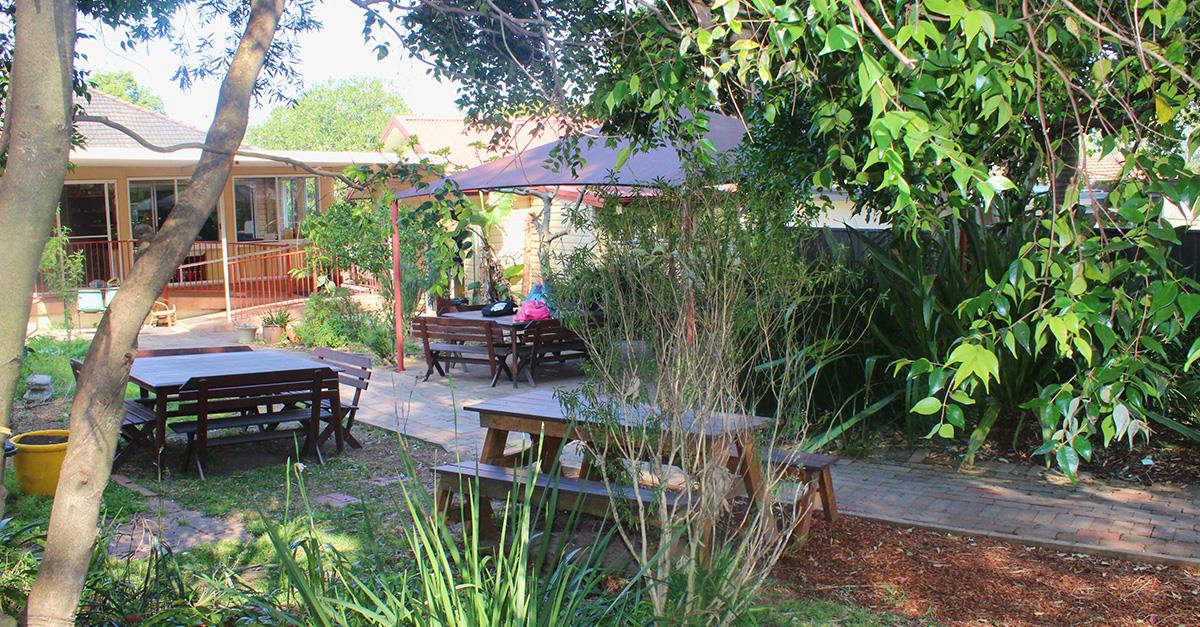
fms-playground_1200x627

Most remarkable was the focus and attention span of the children, who were clearly working on material that in some cases far exceeded the level that children might be expected in many schools, in which a tacit understanding can exist that the purpose of an education is simply to meet standardised curriculum requirements – an understanding that underpins the reductive industrial model of education which pervades our society, and which emphasises the cohort average over individual uniqueness. I hasten to add that the vast majority of school teachers and leaders recognise this reductive approach as inadequate, but they have their hands tied by political and/or financial imperatives; no-one may ever actually want a system in which the individual is not specifically encouraged to flourish … but unfortunately, this is where we have found ourselves in education.

Not, though, in Montessori schools. Dr Maria Montessori was a pioneer of the progressive education movement in the early 20th century, and her detailed methods have stood the test of time. The Association Montessori Internationale summarises the difference between traditional and Montessori schools as follows: “In traditional education adults decide what children need to learn and the ability to retain and reproduce information is used as a measure of academic success. The teacher is the active giver of information and children are passive receivers. In the Montessori approach it is all about the activity of the child. The teacher takes on a different role, that is, to provide the right kind of circumstances so that children can be guided to find what they need from what is on offer. Children then become active learners and are able to reach their own unique potential because they are learning at their own pace and rhythm focussing on their own particular developmental needs at that moment.”

As an observer, I noticed above all the power of quiet, which was palpable in the learning environments. To see young children reflecting, engaging and learning in a calm, relaxed but focused manner was uplifting. It was a reminder of the paramount importance of investing in teachers and teaching, of taking time to build on (and share) the experience and wisdom of teachers, and of working to create spaces in schools which are places where individuals can genuinely be constantly but unobtrusively monitored, supported and challenged. When children benefit from this kind of investment, they thrive; they grow into interesting, inquisitive human beings who have the skills to navigate their path through their future learning – and through life.

To see this already in 3-6 year olds, let alone 12 year olds, was truly a genuine privilege. Progress in education IS possible, and this should fire up educators and parents to demand a re-evaluation of what schools are doing with children. And if they want to see at first hand the breadth, depth and wisdom that Montessori offers, I am sure that they need only reach out and ask.


Three Billboards and an urgent lesson

Three Billboards outside Ebbing, Missouri – an unprepossessing name, perhaps, but the acclaim this film has received is well-deserved. Uncomfortably funny, desperately sad and painfully shocking (often all at the same time), it takes hold of the reader in a way that it logically shouldn’t, with a combination of languor and pressing need that build together to make for compulsive viewing. If you can handle the profanities, I predict that despite your best efforts, you will be gripped.

Whereas the action in many great films ranges across cities and continents, Three Billboards keeps us locked in a single place, beyond which the world barely seems to exist, where outside perspectives seem both exotic and somehow discordant, and yet where the immense depth of human existence is explored and laid bare. Three Billboards is about human imbalance, out of which emerges indomitability, amongst other things; it is in many ways a resounding call for human beings to break free of the shackles that bind them, and see how the world can be different, but it is also a stark reminder that humanity is not to be found in superficial glimpses of two-dimensional characters who have straightforwardly simple moral choices. Humanity, we are reminded, has to be lived and experienced in the raw, relentlessly delving deeper, taking time to understand people and their worlds before we judge them.

And this is the urgent lesson – it is when people feel misunderstood or dismissed that they will find a way to strike out and make themselves heard. The groundswells of dissatisfaction with established politics seen in the last couple of years in countries like the US and the UK have shown us this in practice. These groundswells may have been prompted by complex motivations, and it now seems very possible that people have been manipulated in ways that we do not yet quite appreciate – but when we take time to understand people and their lives, their actions can seem explicable and justified, even if we do not agree with them. If we take time genuinely to empathise and to walk in people’s shoes, we gain a deeper, closer understanding of their humanity.

Understanding people does not cause us to be like them; we can (and I would strongly argue should) simultaneously seek to transcend these same experiences and understandings, in the quest for a shared, more balanced, kinder, more considerate, more loving humanity. But understand them we must. There is no doubt that travel broadens the mind, exposing people to different ideas and ways to see the world, but we should not kid ourselves into thinking that a superficial glimpse into places, cosseted in familiar-looking hotels, gives us the right to say that we understand – culture or people.

We need to walk in other people’s shoes; we need to take time to listen, to hear and to understand. We need to feel their pain as well as their joy, and we need to connect to their souls, sharing in their humanity, if we are to have any chance of working together to be better than we are.

Watch Three Billboards and reflect … because the world really can’t wait much longer for us to get our act together and understand one another.

5 things YOU can do on International Women’s Day

Sometimes it can feel that the gender parity gap is too large for any one of us to make a difference, but in truth every single step we take towards a fairer, more equal world is worth the effort. Today is International Women’s Day – a day where we focus, together, across the entire world, on a concerted drive towards respecting and honouring women, and ensuring that all human beings have equal opportunities, whatever their gender.

InternationalWomensDay-portrait

So today – act. Take five simple steps. And if you are short of something to do, do these five things:

  1. Be inspired by the IWD site and read about the #PressforProgress campaign – “whether through a global conference, community gathering, classroom lesson or dinner table conversation – everyone can play a purposeful part in pressing for gender parity.”
  2. Enjoy the Google Doodle for the day, which highlights artwork from 12 female artists, especially commissioned for today.
  3. Seek out the equality and diversity policy of one or more of the organisations with which you are aligned – a charity, a company, a school, perhaps – and read it. Think about how these values are lived in practice … and how they could better be achieved.
  4. Reach out to a(nother) woman in your life, and lift her up: thank her, recognise her, stand in solidarity with her.
  5. Commit to action – write a list of three things that you will do this year that will make a difference – in your local community, in a national organisation, and through contributing to global change.

Every step matters. Celebrate womankind today.

Democracy and the power of music … and of people’s voices

My fingers are sore from typing thank you emails, and I still have dozens to write; the swift campaign to save the City of Edinburgh Music School this past fortnight has garnered enormous support, and we are all immensely grateful to everyone who was prepared to stand up and recognise that Edinburgh City Council’s proposal to close the Music School was wrong by any standard (not least financially – the money for the School originates from the Scottish Government).

logo

It was enormously heartening to see and hear such passion being expressed by students, parents, former students, former parents and people who had just simply encountered the Music School and understood what it is achieving in musical excellence (a phrase I do not use glibly) for children and young people from all walks of life across Scotland. The campaign was successful: the voices of these people were heard, and Councillors across party borders listened and worked together to make sure that an amendment to the original proposal was proposed, voted upon and passed, saving the Music School.

Reflecting on the last fortnight, there are countless observations to be made, and dozens of lessons to be drawn; here are just three of them:

In a democracy, people’s voices can be heard – but only if you speak up. This is one of the most powerful lessons of the past two weeks. From the moment we had first sight of the internal briefing document which underpinned an apparently innocuous line in a set of budget proposals due to go out to public consultation, people started speaking out to express their views, and things started to happen. People wrote to their Councillors and started approaching politicians on Twitter; they told their families and friends, and they did the same. Councillors listened – they really listened – and started asking questions, subjecting the proposal to a scrutiny that was impressive. Especially considering how much a Councillor is paid (not much), the level of direct engagement and the swiftness of response was astonishing. The same was true of MSPs, some of whom stood up at an early stage in support, and very prominently enabled the truth to emerge, helping the balance of arguments to sway towards maintaining the Music School. Andy Wightman MSP’s question to the First Minister in First Minister’s Questions last Thursday was masterful in illuminating the situation; equally elucidatory was Nicola Sturgeon’s reply. They knew about the issue because it was on everyone’s lips; it was on everyone’s lips because people were speaking out about it and using the democratic channels open to them to do so.

Being a public servant is really, really hard – but ultimately so very important. Having spent the past two weeks engaging frequently with public servants, from elected representatives (Councillors, MSPs, MPs and  members of the House of Lords) to Council officials and the lovely, helpful and impressively well-informed clerks who work in Edinburgh Council Committee Services, I can say with confidence that it is not at all easy to meet all the needs of all the people and groups for which they have responsibility; in fact, this would be an understatement. Balancing budgets in straitened times is – excuse the language – damned hard, and there are only a certain number of ways to cut the cookie. Officials and Councillors know that cuts will not make people happy; in fact, the opposite is true. This does not excuse the lack of transparency in the budgeting process, but it makes it easier to understand why people felt it necessary to obfuscate (and the scale of the endeavour makes it entirely conceivable that the origin of the money to fund the Music School has been lost in the mists of time). It is really hard to be honest and open when dealing with really complex issues in a society which operates by communicating via simple sound bites, but we have to work together to find a way to do this.

Music has the power to make a difference in the world. Music really does make spirits soar. It speaks to our souls, and the language of Music unites us across every possible boundary or barrier you can think of. In the words of the great violinist Nicola Benedetti, who spoke out strongly in support of the Music School,

“We all need a little bit of magic and beauty in our lives – great musicians, people who have dedicated their lives to doing the seemingly impossible, can provide this. 
These students, excelling in this field, have the potential to deliver uplift and beauty to their societies. Continued support for the arts in general is an investment in the health of the country.”

At its heart, this is what was driving us.

So – a busy fortnight draws to a close, and the right decision has been taken on the Music School, but there are many more causes to be highlighted and addressed – causes that affect us all – and the key lesson of the past two weeks is that we do all really need to become engaged and involved in these.

One final observation for now – communities who are passionate and energised make a difference. One of the most wonderful outcomes of the intensity of the past fortnight has been the strengthening and broadening of what was already a community with a shared interest and shared gratitude for the work of the dedicated educators and specialists at the Music School. People have come together and forged friendships in the heat of the fight. My new ‘Best Friends Forever’ are too numerous to mention. Communities with a cause – and the courage to use their voices – can and should work together to make a difference.

Together, after all, humanity is stronger and better.


Democracy in action in Edinburgh, challenging autocracy, and the fight to save the City of Edinburgh Music School

Sub-text: the vital importance of teaching young people how to engage effectively with politics …
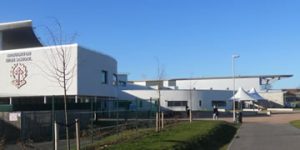
broughton

Are you sitting comfortably?

If you have a spare 2 hours (I know, I know … who does? But this will be worth it!), then watch this hot-off-the-press webcast of the Edinburgh City Council Finance and Resources Committee meeting on Friday 27 October 2017. It is a classic and absolutely fascinating example of how citizens can work with their elected politicians; and how if they don’t, then autocracy and officialdom rule. If you are a teacher of politics, general studies or media, this is your next week’s lessons sorted; even if you aren’t, you will find this fascinating, if horrifying in places. And it should absolutely be a salutary reminder to us all that if we don’t get involved in politics, then democracy fails.


Some background: uncovering a “deception”

You need a bit of background to understand the context – on Wednesday 25 October 2017, an anonymous tipoff to parents and staff at Broughton High School in Edinburgh, home to the internationally renowned City of Edinburgh Music School, uncovered an internal Council document which under the guise of ‘creating’ a ‘citywide equity and excellence music service’ actually proposed nothing of the sort, but rather listed a series of potentially devastating cuts which would result in the closure of the National Centre of Excellence at Broughton and one of its associated primary schools, Flora Stevenson’s, and a dumbing down of musical tuition across the city through more large group instrumental tuition (which, as anyone with any knowledge of music knows, simply does not respond to individual need).

Realising that this was to be discussed at a Council Finance and Resources Committee meeting on the Friday at 10am (less than 48 hours’ time), parents and students at the Music School and at Broughton and Flora’s swung into action, contacting their local Councillors and the press. They wrote and spoke about their personal stories, their fears for the wider school community, the music education provision in the city, and also drew attention to various issues which were emerging that suggested that this was an extremely misguided move on the part of the Council. This meant that the Councillors on the Finance and Resources Committee had at least some more information in preparation for the meeting. The response of a number of Councillors was exceptional – swift, interactive and open to listening. (A big shout out here to Councillor Whyte, Councillor Miller, Councillor Hutchison, Councillor Ross and Councillor Johnston, as well as other local councillors, including Councillor Osler, Councillor Barrie, Councillor Gloyer and more.)


The plot thickens …

As the hours ticked away towards the meeting, a number of interesting issues started to emerge …

  • Funding of the school. The Music School is actually funded, indirectly, by the Scottish Government, and not by the Council. The existence of National Centres of Excellence is recognised as part of the needs-based grants to local councils; this amount was determined by central government and has been fixed for a number of years, even though it is rolled up into the overall settlement. In 2011, Labour MSP Peter Peacock asked a parliamentary question about this:

 24 February 2011. Index Heading: Education and Lifelong Learning

 Peter Peacock: To ask the Scottish Executive what its position is regarding a local authority no longer providing funding for a national centre of excellence in education for which its annual funding had been specifically increased. (S3W-39439)

 Mr Michael Russell:

The previously ring-fenced funding for national centres of excellence was rolled-up into the local government finance settlement with effect from 1 April 2008. Although the provision for national centres of excellence is still recognised in the needs-based distribution formula there is no separately identifiable funding. If a council were to withdraw this service, this could impact on the future funding allocations for that council. The Scottish Government view is that it would not be appropriate for a council to benefit at the expense of other councils, within the distribution formula, in relation to a facility or service that it no longer provides.

Over recent years, the Music School has been asked to cut its budget along with other Council departments. This obviously has had a direct impact on pupils of the Music School, despite claims from the Children and Families Department that frontline services have been protected. This includes a reduction in the number of instruments that can be studied by each pupil, and an increase in funding required from parents for certain activities undertaken by the Music School that are a key part of their studies and essential for their musical education – for example, paying for Grade exams. The Music School has also been required to fund pipes and drums tuition for children across the city from its budget. This means that in fact the Music School actually costs less than the amount originally intended for its costs from the Scottish Government.

Given that the amount included in the settlement to the Council is in the region of £500k a year, and the Council actually spends only around £400k on the Music School, with the closure of the National Centre for Excellence the Council would actually lose significantly more from the Scottish Government than they would propose to save. The closure of the School would be financially counterproductive and would seem to be – in simple, layman’s terms – utterly daft.

  • Councillors being kept in the dark. The Councillors who were members of the Committee (with the exception, it appeared, of those in the prevailing administration – Edinburgh Council is run by an SNP/Labour coalition) did not have access to the internal document which clearly provided the bones of the proposal to close the Music School. (By this time, the internal document was available online, published by a Green Party MSP who was disgusted with the proposal and the process.) No mention of this or other internal documents appeared in the extensive Committee papers. At the meeting, Councillors repeatedly asked for information, which was not given to them … they were told that more information would be available on Monday 30 October, when the proposals went out to consultation, but that it was not available to them at the meeting. This somewhat stretched the bounds of credibility, as it was by then Friday lunchtime, and there was no sense that officials would be working feverishly over the weekend to flesh out proposals which had already been published in summary.
  • Manipulation of democracy: In the meeting, the Councillors were being asked to vote to put out items for public consultation whereby the public voice could be heard about where cuts should fall. However, the amount of savings on the list of proposed areas for consultation added up exactly to the amount the Council was seeking to save, meaning that in fact there was no choice for the public, giving rise to the suspicion that this was purely a (costly) formulaic, PR initiative. Democracy isn’t democracy if there is no choice…


The meeting – the good, the bad, and the ugly

Watch the webcast and spot the following:

  • Councillors asking astute and searching questions, challenging officials and the Convenor of the meeting; asking for more information but being told it wasn’t available. Councillors persisting, uncovering, illuminating. A hooray for democracy, and inspiring to watch.
  • Disturbingly, officials, obfuscating and ‘spinning’ the truth – the Head of Schools ‘reassuring’ Councillors that the Music School would not be closed, but relying on a different definition of what ‘to close’ means. (Shades of Bill Clinton and his definition of ‘is’ …). Similarly, there is an attempt to describe the National Centre of Excellence as continuing to exist while being neither a Centre nor enabling Excellence (and not being National, either). A thumbs down for democracy.
  • Equally disturbingly, obfuscation on the part of the Convenor about the process that has led to this particular list of proposals (adding up the exact amount of budget savings required). Watch as it is gradually revealed that in fact there were other proposals, but that the decision was taken not to submit these to the Committee, leaving the Councillors on the Committee no choices about which proposals should go out to public consultation. Another thumbs down for democracy.
  • A vote, narrowly won in the face of hurdles, to postpone the decision to approve items for public consultation until 7 November.
  • A realisation of the dangers inherent in our system, when officials are not held to account and required to be transparent; if the Councillors had not been alerted to the existence of information developed and retained by officials and the administration, it would have been quite understandable if they had thought that they were doing the right thing by agreeing that the proposals should go to public consultation.


What next?

What does all this mean? Well, on a practical note concerning the City of Edinburgh Music School there is work to be done (at the time of writing) by Councillors, parents, supporters and community members to illuminate the facts of the situation, in preparation for the meeting on 7 November. Parents believe that this proposal should be stopped in its tracks. Watch this space.

For educators – and actually, for all citizens – there is a deep lesson to be learned here about teaching young people the importance of engaging in politics, holding officials to account, thinking critically, and not taking ‘truth’ at face value. In an age where young people are often disengaged from politics, this message is more important than ever before.

Plato said: “One of the penalties for refusing to participate in politics is that you end up being governed by your inferiors.” Don’t let us let that happen.


Background on the City of Edinburgh Music School

The City of Edinburgh Music School is unique: nowhere else in Europe is there a school in the maintained sector which offers a complete specialist music programme from primary to secondary level in two neighbouring centres, completely integrated into a mainstream comprehensive school. It is a National Centre of Excellence. Musical talent – real, amazing talent – is developed through intensive training, involving regular practice, various ensembles and individual expert tuition, and it paves the way for students to secure positions in some of the most prestigious colleges, universities, ensembles, orchestras and media organisations in the world. It has equity at its core, through equality of access to musical tuition regardless of financial means.

Its successes are well-documented in the public domain, as former students have gone on to many great things in the world of music; its overwhelming success, however, lies in how it changes the lives of children with particular needs, stretching and channelling them, and enabling them to become truly themselves, able to develop into adults who will play an important role in society. It is vital for the personal development and growth of all its students. The continuity and stability provided by a community of children and young people, integrated into a wider school community, is a significant part of why the Music School works so well, and why, too, the Music School is able to impact the lives of so many in the school and wider community.


Background on Edinburgh City Council

The City of Edinburgh Council is made up of 63 elected councillors. They represent 17 wards within the city.

The 63 Councillors currently represent the following groups

  • 19 SNP Group
  • 18 Conservative Group
  • 12 Labour Group
  • 8 Green Group
  • 6 Liberal Democrat Group.

The full Council meets once a month and takes decisions on important issues such as the Council budget. The Council also delegates decisions to committees.

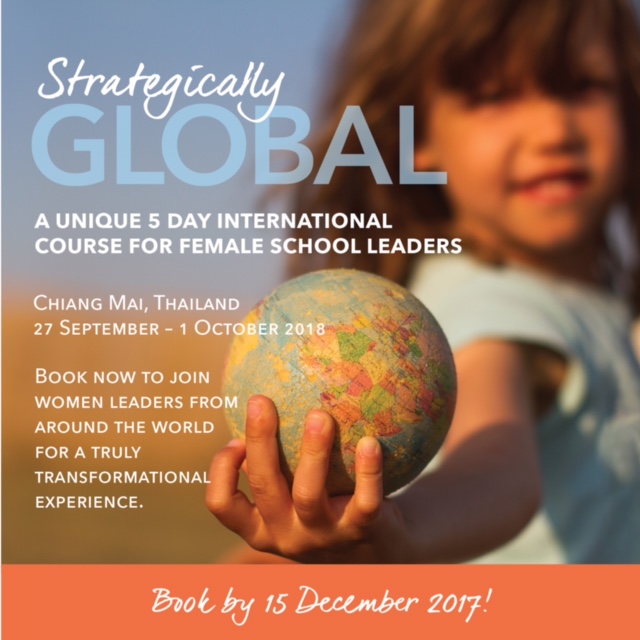
Strategically Global: a short transformational international course for female educational leaders

Dates for your diary: Thursday 27 September 2018 to Monday 1 October 2018

The Traidhos Community north of Chiang Mai, Thailand, is an amazingly beautiful and inspiring place … and this is why we have chosen it as the venue for ‘Strategically Global’, an intensive short course for female school leaders around the world who want to lead their school’s internationalisation strategies with knowledge and confidence. Increasingly, schools are realising that they need to develop comprehensive strategies to provide pathways and opportunities for their students to develop global mobility skills; schools are also realising that they need to invest in their female leaders if they are to release the huge resources that they have to offer.

‘Strategically Global’ has been developed to fulfil these needs of schools – and of female leaders in schools – and has the added advantage of enabling participants to develop a close international network of contacts and relationships, a solid stepping stone towards creating opportunities for students in schools. A unique feature of this course is the pre-course and post-course coaching, one-to-one for each participant; this course is designed to be both practical and transformational.

Course details

Over the 5 days in Thailand, participants will engage in experiential workshops at Traidhos, as well as going out into the nearby community to understand the power of internationally-focused education for all. The course focuses on personal as well as professional development, and aims to strengthen the capacity of each participant to lead her school’s global strategy when she returns home, armed with an array of valuable skills and new friendships.

The three key pillars of the course, outlined in the course booklet, encapsulate all that participants need in order to make a difference when they go back to their own schools. We are committed to making this a very special experience, and have striven to keep the costs low, as well as choosing timings that will minimise absence from school. Thailand is not hard to get to – it is a flight or two at most away from almost anywhere. We understand the needs of female leaders in schools, and we want to stretch, challenge and empower … because ultimately, it is our young people, growing up in a world that is inter-connected globally as never before, who will benefit from these deep learnings.

This is our passion and we want to share it. Please join us!

For further details, and instructions on how to sign up, please see the attached brochure . We are keeping it simple and direct – we are the people who will coach and guide you, and we are the organisers. Engage with us – we look forward immensely to meeting you and sharing with you.

Why open a school?

As I travel to Hong Kong again, this time for the grand and very exciting opening on Saturday of the brand new Dalton School Hong Kong, on whose Foundation Board I sit, I am minded to ponder on why people strive to open new schools. Over the past few years I have seen many, many schools open across the world, and I have been involved in several of these; of the defining features of these openings is that they are incredibly hard work – hours and hours, months and years of developing a concept, finding premises, persuading investors to provide working capital, navigating legalities, appointing a principal and staff (and harnessing their educational experience), bringing together an effective board, designing a unique curriculum, connecting with the world to ensure there are students … building, developing, growing.  It takes a phenomenal effort to start a school; what, then, drives so many people to make this effort and to pursue the goal of opening a new school?

One of the main drivers for new schools is that the envisaged school fills a gap – either because there are no schools at all in the area (which despite the overall success of the Millennium Development Goals is still the case in many parts of the world), or because the new school provides for a different kind of education – more student-centred, perhaps, more forward-thinking, or just refreshingly different from the education which is currently available. Schools across the world are on a journey of constant self-improvement and challenge, and sometimes it takes a completely new structure, freed of embedded expectations, to turn these ideas into reality. For some groups, the motive is financial, because education – like any business – has the potential to raise a profit, but even when this is the case, there is almost invariably a strong educational motive behind the school – no-one takes on the task of bringing a school to fruition without a compelling sense that a school is, of itself, an important thing to develop.

Dalton School Hong Kong

And this belief, I sense more and more strongly, the more deeply I am engaged in new schools across the world, underpins every single new school development: a very central, core understanding that education really, really matters in our world. Education has always mattered and always will; to every question worth asking, the answer involves learning and education. Schools – where we protect time and expertise for the young people of our world – are the prime facilitators of education in our world, and when we consider how far we have come to provide universal schooling globally, and our global ambitions for secondary as well as primary education for all, as elucidated in the UN’s Sustainable Development Goals, we should – at the very least – take pride in what our society has achieved, and how far we have come as a human race.

New schools are not just buildings or collections of policies and schemes of work; they are ideas and pinnacles of hope, of which we can be deeply proud. I, for one, am intensely proud to be associated with them. Saturday cannot come quickly enough …

Bridging the gap

I have spent quite some time recently looking at two iconic bridges – the Sydney Harbour Bridge, which rises in splendour above Circular Quay in Sydney, and the brand new Queensferry Crossing, visible from Edinburgh airport and for miles around. Each is remarkable in its own way – the Sydney Harbour Bridge is the tallest steel arch bridge, measuring 134 m, from top to water level, while the Queensferry Crossing, at 1.7 miles in length, is the longest three-tower, cable-stayed bridge in the world, and also – by far – the largest to feature cables which cross mid-span. Perhaps even more importantly, each is immensely practical and is a beautiful sight to behold.

Sydney-Harbour-Bridge

Bridges are feats of human engineering, and must rate as one of humanity’s greatest inventions. They facilitate movement – physical mobility – by enabling people to travel to previously inaccessible places, and they connect people physically in ways that would otherwise be impossible. It takes a bridge to be able to cross a ravine or a river safely; bridges take us up above the dangers of road traffic, or let us move, as if in the sky, between high-rise towers. Without bridges, it is fair to say, we would get to fewer places, less easily, and some places might just be out of our reach entirely.

the-queensferry-crossing-bridge

And so it is with education – one of the greatest metaphorical bridges of all in our world. Education makes it possible to move from one side of a divide to a better life on the other side; education turns an apparent impasse into the start of a journey. Part of this is about earning qualifications, which opens doors to further study, but it is increasingly and powerfully obvious that the role of education – and schools – is much, much more that of an enabler, enabling young people to discover and have confidence in their own unique profiles, and providing opportunities for these young people to test out what it is like to cross different types of bridges in their lives. In a global world, these bridges come in many and varied shapes, sizes and directions; often they have yet to be built. The more that schools can do to open the eyes of their students to the multiple – infinite, perhaps – opportunities that await them, the readier each student will be to embark on the journey ahead of them – and, where they do not yet exist, to create new bridges of their own.

I firmly believe that anything is possible if we put our minds to it; I believe too that no child should be limited in his/her potential by early life experiences and social background. In showing students how to identify existing bridges to different experiences and opportunities, and in helping them understand (and have confidence in) how to create and build their own bridges, schools are facilitating mobility.

And the world is an easier place for everyone to navigate as a result.

Dr Helen Wright is the author of ‘Powerful Schools: how schools can be drivers of social and global mobility’, published by John Catt in 2016.

Technology, creativity and the power of the natural world

I am currently in Sydney, having flown in for a week to work with new principals in the Association of Independent Schools in New South Wales, as well as with other internationally minded teachers and school leaders. Wonderfully, my visit coincides with the annual Vivid Sydney festival, where landmarks such as the Botanic Gardens, the Opera House and the Harbour Bridge are transformed with astonishing light displays. I thought that last year’s displays were amazing; this year’s installations pushed the boundaries yet further; it is no surprise that this 8 year old festival attracted 2.3 million visitors last year.

In one of the most remarkable scenes of the evening, the sails of the Opera House morph into a jellyfish that is so realistic in its portrayal, so breathtaking in its natural power, and so beautiful in its shape, colour and apparent transparency, beautifully moulded to the sails of the Opera House, that the audience – on the packed quayside – were awed. It was, quite simply – along with, it must be said, the rest of the digital light performance – amazing to watch. The combination of the artistic vision, the creativity and the technological expertise required to represent this larger-than-life sea creature … this was a wonder in itself, and was a sharp and clear reminder of what human beings can do when respect, are inspired by, and work together with the natural world around us, drawing on their inner capacities to think, feel and imagine, as well as on the tools and advancements that their fellow human beings have made, and continue to make.

Vivid Sydney picture

The resulting work, displayed for all to see, is all the more uplifting because it is a step up on last year’s work, when improvement was nigh impossible to imagine, and because, most likely, it will be improved upon yet further for next year. The human spirit is indomitable; its quest for ever greater improvement is unquenchable.

And this, of course, is what we need to be showing our children in schools, from the earliest age. We need to be igniting in them the spark of curiosity that will lead them to explore new territories, new understandings, and new ways of interpreting and using what we already know, as well as discover what we don’t. We need to be showing them pathways that others have forged to find and create the new – not so that they can follow in their footsteps, but so that they can see that such pathways can be imagined and created, and so that they can develop the confidence and self-assurance to set off on their own trajectory. Each of us has our own paths and journeys; schools need to be wise, flexible spaces where adults guide and nurture, but where ultimately they help children release their imagination and are emboldened to set off on their own unique journey through life.

Does this sound like a school you know? If so, please contact me and tell me! I see glimpses of this (or often more than mere glimpses) in many schools across the world, and I encounter many, many young people who are well on the way to becoming their unique selves … but I also see many hurdles that stand in the way of children developing their strengths, and I see much mediocrity.

Vivid Sydney reminds us of what we can achieve as human beings when we set our minds to it; our young people deserve nothing less than that we help them to achieve the equivalent in their own lives.