It was a delicious surprise, arriving from home to Edinburgh Airport 2 weeks ago, to discover that my flight down to London – the first leg of my much longer journey to Hong Kong – …
I finished reading Careless People, Sarah Wynn-Williams’ account of her years at Facebook, while I was still in Sydney recently, and – despite the uplift to my spirits that always comes when I spend time …
Last Saturday morning, towards the end of my short visit to Sydney, I hopped on to the train into the city and sauntered cheerily down towards Circular Quay for a matinee performance of The Merry …
Sitting in a taxi this morning on my way to Edinburgh Airport, enjoying the freshness and extraordinary light of a 4.30 am foray into the Scottish landscape, about to exchange the Scottish summer for the …
In a moment of pure and wonderful self-indulgence last week, I booked a last-minute – by which I mean actually on the day – ticket to see Cole Porter’s ‘High Society’ at the Barbican in …
Escaping (literally) from the turmoil of Brexit and the
political machinations of the UK can appear a particularly attractive option at
the moment. Although I have written in the past about why teaching abroad can
be enormously beneficial, both personally and professionally, I thought it was
an apt moment to recall why this is the case – especially because I was
reminded at the recent Council of British International Schools (COBIS)
conference in London very vigorously of the great opportunities for UK teachers
(and others) that lie in cultures other than their own.
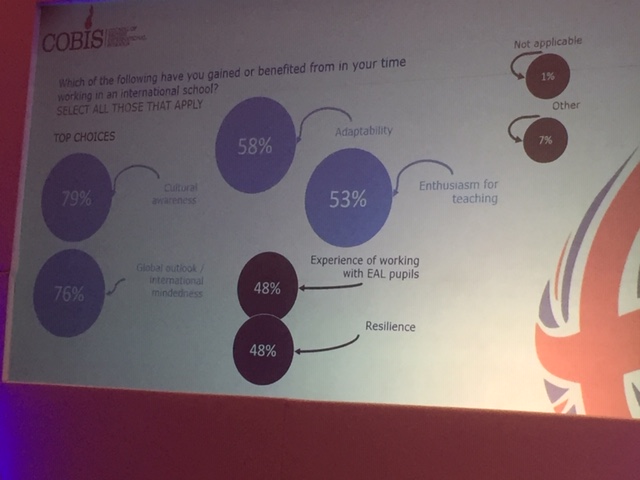
Last year, COBIS conducted a major survey looking into teacher supply in British International Schools and found that 94% of senior leaders in British international schools find it challenging to recruit the required quality of teaching staff; by implication, this means that the roles are there and waiting for highly qualified and proficient teachers. They also looked at the flow of teachers out of the UK and back into the UK, and found positive motivations underpinning each of these – a desire for travel and new experiences when going out, and a desire to come home and bring back knowledge and experience when returning. Teacher movement abroad is – happily for children in the UK – demonstrably not a one-way process.
Of enormous encouragement were the findings of COBIS about
what teachers gained from their time working in schools in different countries:
79% felt that they had grown in cultural awareness, 76% felt that they had
developed a global outlook and were more internationally minded, and 58% spoke
of the greater adaptability that they had developed. What marvellous personal
and professional outcomes! And how amazing if as a result of this personal and
professional development, teachers – with their immediate access to young
people – can be role models for global mobility!
Nothing beats travelling, working and living in a place other than one’s original home. Teachers have a ready-made pathway and opportunities just waiting for them. Seize the day …
Two very different events which I attended at the end of last week in Edinburgh ended with a very similar message about the importance of getting to know the people around us, and I thought this was worth reflecting on for a moment.
The first event was a session on diversity – and, specifically, how we can deal with our unconscious bias, hosted for the Institute and Faculty of Actuaries (IFoA) at the offices of KMPG in the shadow of Edinburgh Castle. People from all fields of actuarial work attended, as did a number of connected guests (I was there because I chair one of the IFoA’s Strategic Boards, their Lifelong Learning Board), and the discussion was robust and at times (to quote the chair of the IFoA’s Diversity Action Group), “appropriately uncomfortable”. For there is, of course, an incredibly vast amount more work that we need to do as individuals and collectively to address the prejudices that we have, and the harm that these can cause; and we should not fall into the trap of feeling self-satisfied because we have a small level of awareness, or of assuming that we have ‘done our bit’ … learning to accept people for who they actually are is a lot harder than it sounds, and we need to work a lot harder on it.
This task is made even harder because, as we heard at the event, research shows that 61% of the workforce regularly engage in ‘covering’, ie covering up or hiding something that is important to their identity … and yet, the more we know about people, the more likely it is that we all understand them, and therefore the more likely it is that we will embrace who they are, and that our lives – and theirs – will be enhanced as a result. There are plenty of very good reasons why people ‘cover’ – through fear of being disadvantaged or ridiculed or hurt – and so therefore the message that emerged was the imperative of practising getting to know people, to give them places and spaces where they feel they can trust enough to talk more openly about themselves, and of accepting them for who they are.
The very same message emerged the next morning when I visited the Edinburgh Steiner School, set in lovely surroundings in South Edinburgh, and gained an in-depth insight from teachers and students about their particularly creative and grounder approach to education. They were calmly and confidently explicit about their intention to nurture a harmonious personality in children with all aspects of their character well-developed, resulting in confident, independent and self-aware young people. What was interesting, and what differed slightly from many other schools which I have visited over the years, it that this sense of self-awareness went far deeper than the individual; it has a purpose, best articulated by one of the current students, who delved deeper – “Steiner has taught me”, he said, “not to make assumptions about people but to find out about them, and stop and appreciate them.”
I have often thought that good schools have a lot to teach other professions about how they grow and manage people, and to hear the same message articulated in two very different contexts, but within less than 24 hours of one another, served to confirm this. More importantly, the message these events mutually reinforced is one that we need to act upon if we are going to have any real chance of drawing out the best of the human race in these challenging global times. So … at the risk of stating the obvious, be aware of the sameness and difference of others, and practise getting to know people (and not just people who seem like everyone else we know).
Above all, let us take responsibility and commit to making a difference. And do it today.
I spent Sunday morning this week with my daughter at
Kidzania, the ‘indoor city for kids’ situated in Westfield Mall at White City,
London (and replicated in various major cities across the world). For those of
you who don’t know Kidzania, it is designed so that children aged 4-14 can
explore a replica ‘city’, with a range of structured activities centred on
establishments such as newspaper offices, a fire station, a detective agency, a
hospital and a pilot training facility … the sorts of establishments, in fact,
that can be found in any city, but just condensed (and shrunk in height) to
make them entirely accessible to children.
It was not in fact my first visit, but I found it as highly stimulating
as my first – and do remember that the adults are not really supposed to be
involved in the activities; my interest came purely from my observations and
reflections on the concept and practice that I could see. The children were joyful,
moving purposefully from activity to activity, making choices about where to
go, counting and managing their money (they earn a salary for some activities,
and have to pay for others), and generally taking charge of their learning. As
an educator, what could be more exciting?!
Reflecting on the session, I returned with renewed vigour to
the question of how our schools can replicate a sense of this meaningful, relevant,
work-orientated learning as part of their curriculum. Schools, after all, are
mandated by society to nurture and develop the interests, skills and awareness
of their students, and part of this mandate must be to ensure that these young
people can connect with the sorts of experiences that they will have when they start
to work in paid employment in their twenties.
(Note that I resist here the temptation to write ‘when they enter the ‘real’ world’; I believe more and more firmly that we do not take seriously enough the fact that our children already inhabit the ‘real’ world – they work, live, experience the world around them … how much more real can the world be? This will be a topic for another blog…)
When I speak at conferences and work with schools on social and global mobility, I emphasise the importance of community involvement in developing relevant work opportunities for students, and I sometimes refer people back to a paper which was written in 1998 but which still rings true today. Written by researchers at Brown University, as part of the drive to facilitate a better transfer of people to the then ‘workforce’, the paper makes a particularly salient observation:
“The most important factor in a school’s ability to put [the vision of developing a strong school-career path] into practice is the involvement of a broad community of adults in the learning experiences of young people. This is by no means standard practice in our schools. For most of this century, what students have been expected to do in school has been dissociated from the life and work of the community in which they live. Unlike the last century, when young people participated in the farming, small businesses, and trades of their family and neighbors, the work of adults has become largely invisible to today’s young people. There are few, if any, opportunities to work alongside adults, or to be taken seriously in an enterprise worthy of adult concern.”
The authors then take the reader through a series of very
practical ‘how to’ steps, based on the 6 As of planning work-related experiences
and strategies (Academic Rigor, Authenticity, Applied Learning, Active
Exploration, Adult Connections, Assessment Practices), which – as they demonstrate
– help teachers and school leaders see students going out to work as a rigorously
and carefully thought through part of their learning journey. It is often said
that the old ideas are the best – and certainly, ideas which have stood the
test of time as these ones have are absolutely worthy of our attention.
What we should perhaps consider carefully is that education
systems on the whole have not really embraced these notions – ‘work experience’
is often seen at best as an add-on (and at worst as a distraction) from the ‘real’
focus of preparing students to achieve high academic grades … ignoring the fact
that these are systems where the majority will (no matter how this is packaged)
by definition fail, because they won’t be able to reach the highest grades,
upon which the rest of their future is predicated.
Experiential learning – learning by reflection on actual doing
– is how we learn as adults, and so (unsurprisingly!) so too do children. Let’s
start by talking more about how we can all work together to integrate and embed
whole world experiences more effectively into the education of our schooled
children. Learning is for life, not just for Sundays, after all …
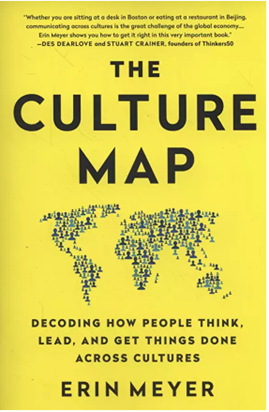
I have just been dipping in again to Erin Meyer’s very readable book ‘The Culture Map’, which I do from time to time, just to remind myself of the urgent imperative of developing cultural understanding in a globalised world – the world in which our young people are growing up, and in which they will have to work and live. To the initiated, the terms ‘intercultural sensitivity’, ‘intercultural understanding’ and ‘intercultural fluency’ – all of which I group together under the encompassing term ‘global mobility’ – are without any shadow of a doubt essential for our young people to be able to flourish and thrive in today’s world; what is deeply concerning, however, is that so many people are as yet uninitiated into this concept …
Perhaps Erin Meyer’s words will help … in her conclusion,
after several chapters of (fascinating, thought-provoking and enjoyable)
examples of how diverse cultural teams have learned to work with one another by
understanding better where they stand on various different scales of
interaction and philosophy, and by exploring the preconceptions with which they
have been brought up, she reminds the reader that while every individual is of course
different in their own human right,
‘Yet the culture in which we are brought up has a profound impact on how we see the world. In any given culture, members are conditioned to understand the world in a particular way, to see certain communication patterns as effective or undesirable, to find certain arguments persuasive or lacking merit, to consider certain ways of making decisions or measuring time “natural” or “strange”.’
Leaders who are armed with this appreciation are, she points
out, far better prepared to be able to understand and work effectively with
people from around the world, and, as she points out,
‘When we worked in offices surrounded by others from our own tribe, awareness of basic human psychological needs and motivations, as well as a sensitivity to individual differences was enough. But as globalization transforms the way we work, we now need the ability to decode cultural differences in order to work effectively with clients, suppliers, and colleagues around the world’.
For adults already enmeshed in the world of work – or wishing
to extend their sphere of influence and their success – then The Culture Map
makes an excellent starting point; school leaders should absolutely read it
too, because the beauty of school is that it provides an opportunity for children
and young people to have time, over several years, to become immersed in an appreciation
and working knowledge of the subtle differences of other cultures … provided,
of course, that the school really, really commits to a fundamental shift in its
priorities and in its primary focus.
In our world today, where our children’s generation face whole-world
problems which can only be tackled on a global scale, cross-cultural communication,
at a deep and powerful level, is essential. In the schools where I have challenged
and worked on global mobility, I have seen how it is possible to make a
difference, and my message to schools and their leaders is … act now … and
start immediately by educating yourselves … because where you lead, others will
follow …
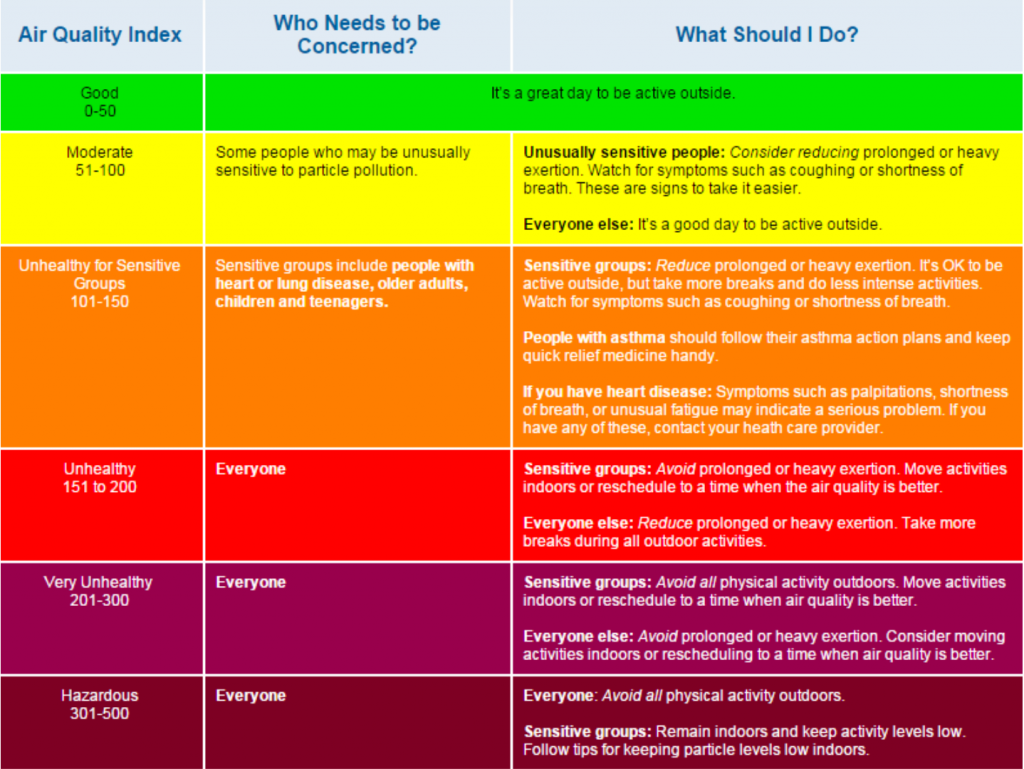
One of the differences about working in Chinese schools, as I was reminded last week, is the importance of AQI. AQI, as I am sure you know, stands for Air Quality Index, and there are strict guidelines in schools in China for what needs to happen if the AQI rises above certain permissible amounts – above 100, for instance, children with respiratory sensitivities are required to stay indoors; and there is a sliding scale right up to 300+, when the school will be closed and no children allowed out at all.
It can be tempting to dismiss this as an issue restricted to the mega cities of Asia, or to blame it solely on outdated industrial practices which have long since been abandoned in other parts of the world, but this would be entirely false. (Besides, I have never seen as many – non-polluting – electric cars as I did in China.) Download an AQI monitor with global reach, and you will see oranges and reds (neither of which is good…) across the world. And the thing is… air doesn’t stand still. What is in the air will travel. One city’s problem is all of our problem, and any complacency we might feel, from wherever we hail, about ‘we’re ok’ is – quite frighteningly – completely unwarranted.
Climate change is without question, surely, one of the most pressing issues of our time, and it requires global solutions that start with each of us, but extend far beyond this. If the scientists are to be believed – which, quite frankly, they probably are – then we have little over a decade to avert unimaginable disaster. Our planet is working overtime to try to clean the air as we pollute it, and we need to start loving it a lot more, confronting our emotions and connecting with nature. My friend Nadine has worked in this field of research for years – read what she has to say, and listen to the voices of young people as they try to make politicians wake up to what they really, really need to be deciding on, now!!
There
are tough decisions to be made, and we can’t keep living the life we have been
living. Everything we do will help, so reduce your own emissions, understand
what is happening in the world around you, eat less meat, leave the car at
home, carbon-off-set your travel, recycle, cut down your over-consumption of
everything, and agitate…
And start by downloading an AQI indicator… but remember – we share the same air… if there are reds anywhere in the world, this air is coming in our direction too. We are all in this together; let’s stop thinking it is someone else’s problem…
This last week has been a whirlwind of activity for me in the great Chinese cities of Shanghai and Hangzhou, where I have had the pleasure of speaking at the Wellington Festival of Education. I have shared the experience with some other fascinating speakers and educators, and it has been enormously stimulating to elicit excited and immensely positive reactions from the many, many attendees – parents, teachers and other interested adults. I am returning to the U.K. on a real high, with a strong sense of having had impact and of having contributed to an important debate on education which transcends cultural boundaries. What a week!
A recurring theme in the conference – one to which we kept returning, in various different guises – was that of ‘wellbeing’. Quite rightly one of the major issues of the educational world, wellbeing at EdFest manifested itself in several different ways, from Professor Ferre Laevers and his scale for measuring wellbeing, to Professor Sir Jonathan Bate’s work on reading poetry aloud as a way of improving mental health, and to Ruby Wax and her reflections on ‘How to be Human’; if you have a chance to see her brand new one-woman show on tour, go! The laughter alone will make you feel more mentally healthy, let alone the messages she imparts.
As
part of this journey over the past week, the conversations we had have taken my
thinking on social and global mobility to another level, namely that the
intercultural confidence that forms the core of global mobility is an important
contributor to wellbeing, to the extent that we cannot afford any longer to
ignore the deep and central importance of global mobility in schools, and as an
underpinning driver for student activity in and beyond the classroom. Global
mobility is a fundamental subcomponent, I demonstrate, of social mobility,
which is all about young people having choices in life – the choices that lead
to self-determination in life and a sense of purpose, both of which are
prerequisites for wellbeing.
Global
mobility matters! And, as I have been sharing with parents and educators over
the past few days, it is eminently possible to achieve, with the right
combination of inspiration, catalysing and coaching. I love helping schools on
the path towards a closer embedding of great practice in their work, and the
amazing discussions I have had over the course of EdFest China have
strengthened my resolve.
This week finds me in Shanghai, at the Wellington College International Shanghai EdFest, where in addition to talking about the benefits to young people of having global mobility – and what this means in practice – I have also been roped in to chair a couple of panel sessions on ‘Third Culture Kids’. Ably assisted on the panel by some actual Third Culture Kids, our aim is to explore what it means to be ‘Third Culture’, what the benefits are, what the challenges are, and what schools can do better to recognise the particular needs of these students.
The term ‘Third Culture Kids’ was coined in the 1950’s by a pair of researchers studying the children of American citizens who were brought up in different parts of the world as their parents travelled for work, and the name has stuck: today, it is commonly used to designate children who are raised for a significant period of their early developmental years in a culture other than their parents’ own, or other than the country which is inscribed on their passport (or, indeed, in many cases, one of their passports). Long gone, in fact, are the days when the world could be neatly imagined as segregated into monocultural chunks on a map; half of the world’s children are bilingual, and this means that vast swathes of our global population are growing up exposed to two or more cultures.
Shanghai skyline at dusk
Being
a Third Culture Kid brings challenges and benefits in equal measure; but then,
what child does not have challenges and advantages, whatever their heritage?
Third Culture Kids might just have the upper hand, however – despite the
challenges of establishing an identity, a less deep understanding of their
‘home’ culture, and (sometimes) confused loyalties, a Third Culture Kid, it has
been demonstrated, has the tremendous advantage of an expanded worldview,
intercultural and interpersonal sensitivity, and a greater degree of
cross-cultural competence or cultural intelligence, which enables them to work
far more effectively across a range of cultures. What a gift!
The
big question for schools, however, is whether we really recognise and nurture
this gift. All students are different and unique, but Third Culture Kids have
an added layer of difference and uniqueness which might sit outside the norms
and expectations of schools, especially if they have a more mono-cultural than
international cohort. Do we address this sufficiently well in schools? Do we
take time to help our teachers to challenge their assumptions about what
students should be and do? Do we explicitly value the interculturality of Third
Culture Kids? Do we hold them up as examples, and encourage other children to
emulate them?
Big questions, with some interesting answers… more to follow from EdFest in Shanghai…
I return to this blog with renewed vigour after an absence… and I put this renewed energy all down to my wonderful day’s coaching with my secret support – my own leadership coach. I have spent the day in the beautiful East Coast of Scotland town of North Berwick being challenged, prodded and uplifted, and I return to Edinburgh exhausted yet invigorated, and determined to reorientate my ‘to do’ list so that I can make an even greater impact through my work and wider life. What an amazing day!
(North Berwick – source: Visit Scotland)
Educators are sometimes the most reluctant people to be coached, largely – in my experience, at least – because they are so heavily focused on helping others that they diminish their own needs and fill their lives to bursting with school and work to such an extent that they do not think they have time simply to invest in themselves. Of course, it is actually plain common sense that if we do not invest in ourselves, then we are less capable of giving our very best to the world… and since this is precisely what educators want to achieve, then they should really grasp eagerly, with both hands, any opportunity for coaching with which they are presented.
Coaching is challenging, affirming and transformative. It can make an enormous difference to people, and the effects can be long lasting. It is also hard work; think of it like continuing professional development on steroids… people who engage in the coaching process effectively can reap a myriad of rewards for their schools and the other people around them, as well as for themselves.
So – my message for today is… find yourself a really good coach, and invest in yourself! You will be glad that you did…
Oh, and many of you know, my passion is social and global mobility for students worldwide. Well, we were working today on an even more robust programme for schools seeking to embed global mobility for their students deep into their very fibre, through a combination of catalysing events and accountable coaching for senior leaders. So… reach out if you want to connect further on this. I can’t wait to share!
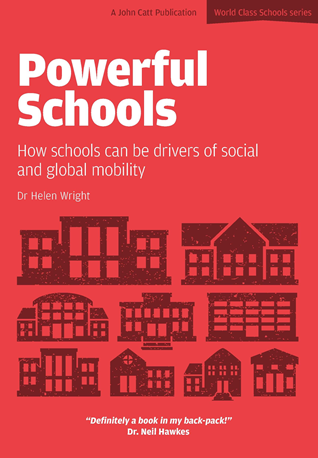
If you have a spare moment, read my book on Powerful Schools (available on Amazon) and how they can be drivers of social and global mobility… it will start you on the journey!
Whatever we can do to support school leaders, we should. School leaders make a significant and positive difference in schools – just ask Professor John Hattie – and a poor fit (even of a highly skilled and highly experienced leader who is just in a place which needs something different) is enormously costly, both financially and emotionally, for all concerned. The tragedy of a poor fit in leadership is that it can result in outstanding leaders deciding to leave school leadership… and in a world which is crying out for great educators to help the next generation do a better job than current and previous generations, then this is absolutely not what any of us want.
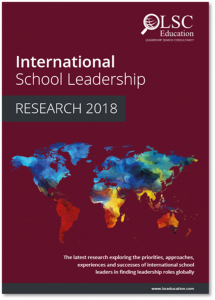
So when research comes along which helps school leaders – and boards – to make wise choices in their next step, then we should share it. Last year, the team at LSC Education questioned over 200 leaders in international schools around the world about what had worked (and what hadn’t) in recruitment processes for roles which they had since found to be a good (or poor) cultural fit for them, and the results of this research provide fascinating – and very practical – insights that can be of real use to aspiring and current leaders in international schools (although I would venture to suggest that leaders in almost any school would find that these findings resonate). Insights into personal priorities in choosing a role include the high level of importance attached to shared values… and also the difficulty in identifying these values unless there is significant exposure to school life during the recruitment process; unsurprisingly, perhaps, salary figures are fairly low amongst the main priorities that school leaders have in choosing a role – and what this should flag up to boards is that school leaders will not necessarily behave in the same way as employees in other lines of work with which board members may be familiar (and they certainly can’t just be bought and sold, despite being a much-in-demand commodity).
Above all, the importance emerges of self-awareness – on the part of boards about what their school actually stands for and does, and how they represent themselves and their plans for the future; and on the part of candidates, who need to work out what they really, really want, and what they are best suited for, and then look for the clues and signs that the role for which they are considering applying is actually the right one for them. It has been heartening seeing more candidates seeking out and benefiting from LSC’s career coaching service, and some boards are already very reflective and thoughtful about their recruitment processes, which is extremely encouraging. There is significant work to be done on all fronts, however.
If you were at the IPSEF conference in Dubai in September, or at the FOBISIA Leadership conference in Bangkok last week, then you would have heard me talking about the key findings, and if you are part of the Wellington and Huili Education family in Shanghai, then you will have an opportunity to hear some of the insights during the weekend of 25-26 November. Please do feel free to get in touch directly, however, and certainly download the research report here.
And good luck! Together we can help ensure that the right leaders are in the right schools, making a positive impact. When they are, they will make the difference for young people who the world needs.
I have lost count of the number of years I have been coming to the Edinburgh Fringe, let alone of the number of performances I have attended; what I have not lost, however, is the joy and wonder I feel every year when I immerse myself in much of what the Fringe has to offer. Literally thousands of performances, at hundreds of venues, over a 4 week period every August… it is no surprise that the city and surrounding areas almost visibly explode with creativity. Uplifting and energising, the Edinburgh Fringe is where to be at this time of year.
One of the highlights for me this year was the Universoul Circus – an astonishingly vibrant, energetic and daring collection of diverse acts from across the globe, who at times, appeared to challenge the laws of gravity. From audacious tightrope walking to high octane limbo dancing, and with acrobatics, hip hop and edgy clown antics thrown into the mix, this show was one long OMG moment. Think Notting Hill carnival on steroids… the joy of it all was palpable. A sign of greatness in the arts – books, plays, art, music… anything – is that they change you, and that your encounter with them makes you just that bit more of a different (and hopefully better) human being. If we are to make the most of our time on this planet, then we need constantly to grow and evolve, and the inspiration that the arts sparks in us is one of the most sure-fire ways for us to achieve this.
A wise friend of mine once told me that everyone should take some extended time every year to become still, calm the mind and rebuild a sense of self; I am absolutely certain that this is true – equally, I believe that we each need to take some extended time each year to stretch our imaginations way beyond the limits we thought they might have, to gasp in awe at the capabilities of the human body, to see and experience things we would never otherwise see and experience, and to free our minds to soar.
Suitably rejuvenated, we can return to the task of growing, stretching and empowering the young people of today, whose imaginations often already far exceed those of their adult peers. Educators of the world – enjoy!!