Quaker schools: enduring values in a modern world

Faith schools are back in the news again, with the publication of the UK government’s Education green paper proposing (amongst other things) that faith schools should be able to select students largely on religious grounds rather than with the limitations currently in place. Faith schools come in a number of different forms, however, and my recent visit to Ackworth School in West Yorkshire, one of 8 Quaker schools in England, prompted me to delve into the history of Quakerism in education in the UK and across the world. As I did, I was struck by the importance in Quaker history of the personal – the inner spirituality that we all have, and that Quakers gently emphasise.

As anyone familiar with schools will know, history and the ethos which emerges from this history have a real impact on the daily life of individuals in educational establishments. It is remarkable, in fact, how much this history marks people in schools, perhaps because – almost subconsciously – members of the school community detect around them, every day, evidence of a coherent, deeply embedded philosophy and approach to education. Schools are born out of their contexts and are shaped by them. Much – perhaps even most – of the development of values and character in a school comes not from what might be described as transactional education in the form of teaching to exams and curricula, but from something much deeper and intangible – observations of and interactions with others, for example. Values are learned because they are transferred from others, who have in turn learned from their predecessors. In this respect, history and a shared ethos are integral to the growth of a child.

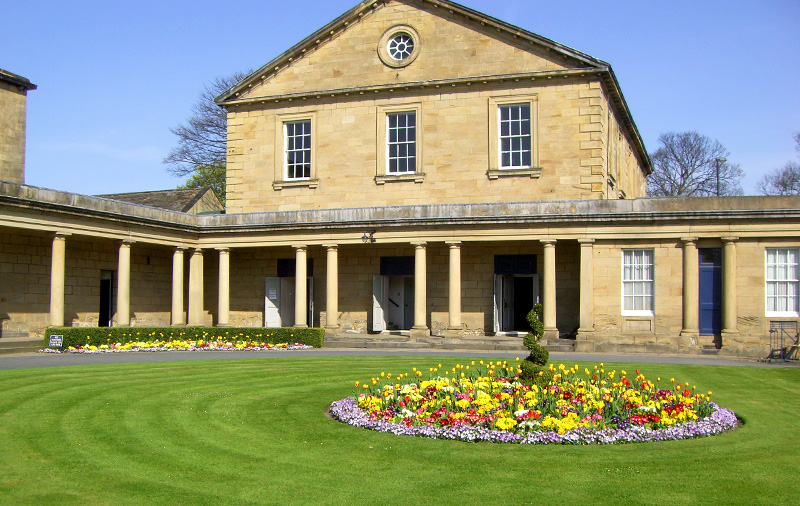
ackworth-school

When I was at Ackworth, I asked a senior student what was really special about the school, and she replied with conviction that ‘no-one is a stranger here’. She really meant it, and I could observe exactly what she was communicating – there was an ease of relationships, a care for others, and a shared, friendly, sense of aspiration which was uplifting. Undoubtedly the Quaker values of the school – lived and experienced in the moments of silence in which there can be found respect for the world and all beings – lay behind this.

It is always a privilege to visit great schools, and in a world which really needs more respect, tolerance, care for people and friendship, it was a particular pleasure to find these enduring Quaker qualities alive and thriving.

The Power of One: teachers driving social mobility

Last week I participated in a highly stimulating event run by Changing the Chemistry in Edinburgh on what investors expect from boards. Reflecting on the banking crisis from an insider’s perspective, the speaker commented that from a regulatory standpoint, he had always believed in the Power of One, ie the importance of a single voice having the perspicacity to draw out the truth, name it, and speak up, and by so doing, open the eyes of everyone. In a classic example of how our understanding of the world can be enriched when we bring together different spheres of thought, I found myself ruminating not only about how true this is of boards in general, but also about how true this is in schools, and with teachers and school leaders in particular.

Social mobility is very much in the UK news at the moment, with the publication on Monday of an Education Green Paper by the government which prepares the way for a generation of new academic grammar schools, amongst other related policies. Grammar schools were widely heralded in the 1950s as engines of social mobility, but with time and distance, it may well be that we have lost sight of what (or rather who) actually enabled that social mobility – in secondary modern schools as well as grammar schools –  namely the teachers themselves. No-one other than a parent has more day-to-day contact with children than teachers, and the power of a teacher’s word is never to be underestimated. Teachers can make a vast difference to children’s lives through their expectations and their ability to encourage (literally, give courage to) children to attempt subjects and activities that they might not otherwise have considered, but which lead them on to paths which deeply influence their lives.

I spent some of this past weekend at the marvellously forward-thinking Ackworth School in Yorkshire, and as I stood up and spoke to an audience of senior school leaders from the area, I reflected on how one of my school teachers in the 1980s had directly contributed to my presence there to talk about social and global mobility, by selecting (a somewhat reluctant) me for the school public speaking team, and working with me to overcome my reservations about standing up in public. Other people over the years, of course, have helped me to be able to speak fluently in public – usually by just expecting me to get on with it – but I particularly remember this teacher because I recall not especially wanting to put myself forward for the team, and yet he persisted, I participated, and as a result I gained enormous confidence (and success – we came 3rd in Scotland in a contest aired on BBC radio). Teachers have the power to shape children’s futures, and because they care passionately about the children in their care, they will often go more than the extra mile just to make sure that children rise to their potential – a potential which, unsurprisingly, children themselves cannot always see.

In amongst all our current political commentary on social mobility and education, which consists overwhelmingly of discussions about systems and structures, we need to remember that it sometimes takes just one person to make a difference to a child, and in so doing to set them on a path which enlarges their horizons and directly affects their ability to choose what they will do with their lives. This is social mobility in action – and the real drivers are teachers. We should laud them and release them to work their magic.

Dr Helen Wright is the author of Powerful Schools: how schools can be drivers of social and global mobility, published by John Catt Educational (2016)

Coding: a fundamental element in the drive towards social mobility

The Guardian has an uplifting story in its pages today – the story of how 67 girls in an Indian slum are taking coding lessons, and how this has already raised their aspirations and improved their future opportunities. Three apps have already been developed, directly tackling issues of women’s safety (by using a geolocated distress call), overflowing rubbish (by making it easy to upload and send pictures of accumulated rubbish to the local municipal authority) and time for study (with a app which sends an alert when the girl reaches her place in the queue at the communal water tap, meaning that she does not have to stand in line).

CodingThe project is the brainchild of a local non-profit organisation, the Slum Innovation Project, which runs a number of educational programmes for the children in Mumbai’s Dharavi slum, and – judging by the interviews with the girls concerned – it has been hugely successful in raising their levels of confidence and literacy, as well as opening up their minds to the possibilities that the digital world can bring them.

For there is little doubt – in a world that is digitally connected, personal digital literacy can open doors in a way that has not been available to previous generations. Moreover, the deeper the digital awareness – ie the greater ability to create and manipulate the code that underpins all digital activity – the wider the opportunities for young people to be able to operate in a global market. If ever there were one element that could make a difference to young people’s life chances by enhancing their freedom to choose what they do with their lives, it is the eminently learnable ability to code, and as technology becomes cheaper and cheaper, its power to transform opportunity grows in equal measure.

There are many reasons to learn to code, not least the rigour of thought and the logic it develops and strengthens in young (and old) minds; its capacity, however, to be a tool in the arsenal of social mobility, however, ranks pretty much at the top of the list. And at least 67 girls in India – the tip of the iceberg – can speak to that.


The joy of start-ups: a non-exec perspective

In my non-executive career, which had its fledgling roots in 2008 alongside my executive career, and has since broadened out considerably in the UK and internationally, I have found myself increasingly drawn towards start-up companies, and I thought that it was worth spending a few moments sharing why this is the case, in the hope of encouraging others to take the same path. Start-ups need really good non-execs if they are to navigate the first few tricky years of their existence and flourish into amazing companies. Why, though, should any budding non-exec consider taking on a role in a start-up?

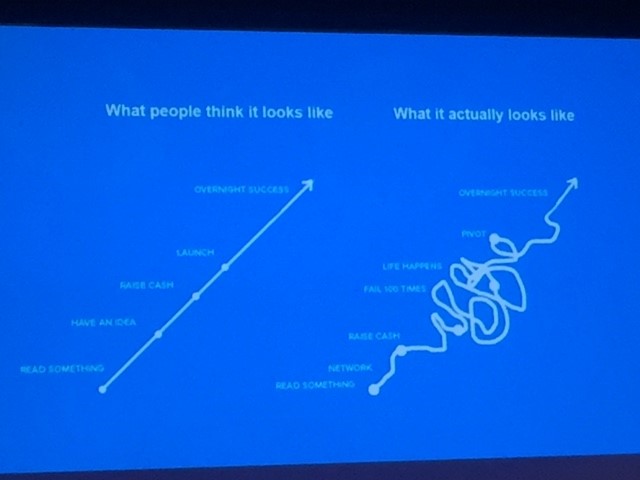
startup-1

Start-ups are fresh and exciting

The start-up world is fast-moving and has a pace which is rarely matched in other company contexts. Initial ideas can evolve rapidly and dramatically depending on market conditions, results of beta-testing and sometimes access to funding. Running with the flow and responding to fresh approaches – as well as suggesting some yourself; these are often really attractive prospects for potential non-execs. Moreover, until required to have a board by next-stage investors, start-ups often rely on advisors; for a non-exec, the opportunity to help create an effective, relevant and responsive board structure from scratch can be really motivating.

Start-ups will enable you to put your experience and networks to good use

Leading a start-up is all-consuming; start-up founders often run themselves ragged trying to bring a new product to life. There is rarely enough time in the start-up founder’s day to do everything that needs to be done, especially when it comes to wider industry connections and developing their networks. They need sympathetic, interested, enthusiastic and experienced people to walk alongside them and help make things happen for them, from advice to access to networks. If you can make a simple connection with one of your contacts, this could make a huge difference for a start-up seeking to extend its reach.

Start-ups need diversity on their boards

Actually, every type of organisation needs diversity on their boards, in order to provide better – 360 degree – oversight, as well as deeper insights, into the work of the organisation, but start-ups really, really need people who will challenge them to think differently. Start-up founders are invariably passionate about what they are doing, and can become entirely immersed in their products; non-execs who have alternative perspectives, and who think differently from the founder, can sometimes be an invaluable help in clarifying strategy and placing activity in a wider context, thus helping the company avoid unnecessary pitfalls.

Start-ups are rarely able to pay their non-execs anywhere near what they might receive in a different company, but stick with them and – if you have judged them right – you will be able to grow with them as the company grows. Besides, the reward comes in helping others make a difference in the world, and who can put a price on that? Enjoy!


Creativity in schools: the progress of humanity depends on it

Speaking over the weekend at the Edinburgh International Book Festival, the children’s author Cathy Cassidy could not have been clearer – creative daydreaming lies at the root of everything we seek to create. It has certainly worked for her, as she is a hugely successful author with fans all over the world; as she pointed out, however, ‘daydreaming’, so often maligned in schools, is, according to many great scientists, mathematicians and engineers (and others) actually an essential component of all invention and development. We confine or squash it at our peril.

Creativity in schools

Edinburgh in August is an astonishing place to be, and the Book Festival is only part of the action. Alongside the original Edinburgh International Festival, founded in 1947, which brings world class arts to the city – music, drama, dance, opera – the equally longstanding Fringe Festival explodes all over the city, using seemingly almost every space to explore creativity in almost every form. Over 3000 shows and events take place in a four-week period: visitors and participants can throw themselves wholeheartedly into the whole turbulent and uplifting experience.

From a multi-layered and hugely entertaining (loose) rendition of Shakespeare’s Midsummer’s Night Dream, served up with breakfast, to Dr Seuss’s Cat in the Hat complete with bubbles and huge bouncy balls, and from late night comedy to a mid-afternoon silent disco led through the streets by an irrepressible disco ‘guru’, there is – as aficionados of the Fringe will know – a veritable feast of creativity on show. In a moment of personal nostalgia, it was a wonderful pleasure to see St Mary’s Calne students continuing the tradition of excellent young theatre at the Fringe, with a scarily realistic (and very politically relevant) grown-up version of Little Red Riding Hood.

When you are surrounded by such creativity, routines slip and the impossible becomes possible. Convention is thrown to the wind: whereas an evening’s outing to the theatre might for most people, for most of the year, be a rare occurrence, planned for well in advance, with special arrangements required, Edinburgh in August sees people catching five, six or more shows in a day, buying tickets on a whim, and dashing to make it to the venue before the door closes.

What does all this lead to? For the actors and dancers and singers, they practise, grow and develop their art; for audiences young and old, they are immersed in what is effectively a bain-marie of creative activity, and it acts astringently on the brain. It puts routine and structure into its proper place – as an essential support to thought and experience, but not its driver – and by bringing often contrasting experiences together in quick succession, it sparks original, imaginative, inventive, ingenious thinking.

For educators, education policy-makers and – in fact – everyone involved in any way, however tangential, with education today (which is all of us), it is a powerful reminder that creation and innovation need space, inspiration and stimulus, and often cannot be planned to the extent that they have clearly defined input leading to clearly defined outcomes. Planning really matters in education … but not as much the space and the unexpected which this planning should be designed to support. As the school year commences in the northern hemisphere of our planet, let us remember this power, and cling on to it even when processes and procedures threaten to become the tail that wags the dog of education.

And if we do, who knows what fresh original thinking and human progress will emerge as the year unfolds? It is – as ever – a deeply exciting


Celebrating the success of British International Schools across the world

BIS

As the dust settles on the Brexit debate, and the UK prepares to shift its relationship with Europe, it is worth taking time to reflect on the very positive stories of British engagement in the wider world, and this is especially true of British education in international schools across the globe. English-medium international schools educated almost 4 million children worldwide in 2015 – a figure that is set to rise to over 8 million by 2025 – and of these schools, over 40% taught a UK-based curriculum. Around 125 of these schools have already undergone the voluntary British Schools Overseas inspection, instituted by the UK Department for Education recently, in 2014, as a quality brandmark, and more are following swiftly in their footsteps. A British education is highly sought after.

And this, of course, is why British international schools are worth celebrating. I am delighted to be part of the prestigious judging panel for the British International Schools Awards 2017, as these awards were set up specifically in order to recognise excellence in British schools overseas, to celebrate the success of the sector and – a natural by-product of celebrating success – to help set benchmarks in best practice. The categories for these awards are:

  • Strategic Initiative of the Year
  • Financial Initiative of the Year
  • Senior Leadership Team of the Year
  • Governing Body of the Year
  • Community Initiative of the Year
  • Pastoral Care Initiative of the Year
  • Teaching Initiative of the Year
  • Marketing Initiative of the Year
  • IT Initiative of the Year
  • International Impact award
  • Lifetime award
  • New British International School of the Year (under three years)

and in addition, there is an overall award for the British International School of the Year 2017, which will be chosen by judges from one of the winners of the first ten categories. The deadline for submissions is 21 September 2016, and the presentations will be made at a gala event on 23 January in London at the Grand Connaught Rooms, Covent Garden.

At the close of one school year, and in preparation for the next, and in amongst the many political turbulences of the moment, the time is absolutely right for British international schools to reflect on their many, many achievements. They are leading the way in global education, and we should celebrate them.


If you are a British International School and would like to enter for one of these awards, the application form can be found here. Good luck!


The power of diversity in the world: the role of international educational institutions

In her inaugural speech as Vice-Chancellor of the University of Oxford on 12 January 2016, Professor Louise Richardson spoke passionately about the tradition and the history of this great university. The ceremony took place in the Sheldonian, Sir Christopher Wren’s great ceremonial hall, completed in 1669, a stone’s throw from the University Divinity School, which was completed in 1483, and in the heart of a city where evidence shows that university teaching has been underway since at least 1096. It is a special place to sit, and to witness the admission of the 272nd Vice-Chancellor to the university, taking on the mantle of leading one of the world’s greatest educational institutions, especially as the message from both the Chancellor, Lord Patten, and the new Vice-Chancellor, very firmly linked this tradition and history to the university’s leading-edge modernity and its international reach in today’s world.international educational institutions

Primarily, their message focused on the power of thought and critical reflection to push forward the boundaries of human knowledge and understanding. This, it was stressed, is part of a continuum of academic scholarship that has developed over centuries, withstanding vast historical movements, and is as relevant today as it has ever been. Central to this tradition has been the interaction of students from different national backgrounds with one another; indeed, as Professor Richardson reminded us, the first recorded student from overseas came to the university in 1190, and international students have been a vital part of the university since, as they should be in every university. She spoke passionately about the power of diversity of thought, describing her experiences teaching a Masters’ degree course on terrorism at her previous institution, the University of St Andrew’s, where it was rare for more than two students to share a nationality. “The quality of debate that takes place in a classroom in which nobody shares your assumptions, and yet everyone respects your right to an opinion, on a topic as charged as terrorism,”, she said, “is unrivalled.”, and she added: “It is exactly the kind of education we should be providing our students to prepare them to enter a globalised world.”

When different perspectives are brought together, elucidated and debated, then this assists individuals in the articulation and development of their own thinking, and it also leads to a greater appreciation of, and tolerance for, the views and attitudes of others. It creates new understandings and knowledge, and diversity of thought is a tremendously powerful stimulus in this act of creation. Moreover, as Professor Richardson reminded us, greater global mobility is enabling ever greater possibilities for pursuing these global perspectives, and this is to be welcomed with open arms.

International education is important in today’s world – and, in a technologically connected world, arguably more important than ever. When the Vice-Chancellor of the University of Oxford stands up and says so, clearly and boldly, then every other educational institution which promotes international education and global thinking, from nursery through primary school, secondary school and beyond, including lifelong learning institutions, can be reassured that they are on exactly the right path of development.


Brexit and the values embedded in British education

BREXITTo an extent, it doesn’t matter what the decision was. What really matters is how we deal with it. And this is where – we hope and trust – two key values embedded in British education come into their own.

British education is renowned worldwide – much more so than practitioners based in the UK often seem to realise, bombarded as they are with PISA statistics and national examination results which emphasise that the practical outcomes of this education are ‘not good enough’. These statistics and results are part of a wider debate, of course, about what education is actually for; arguably, the practical outcomes demanded in an exam-focused culture are not really what we want or need in our society today. However, this debate is peripheral to a fundamental and shared understanding of what makes a British education truly great, namely its core values. These are the values that are part of the very fabric of British schools – in the UK and overseas – and that are explicitly and implicitly taught every day; these are the values that are admired and appreciated worldwide.

The first of these values is tolerance. While this may have a hollow ring about it, given that fears about an imbalance of immigration in the pre-Brexit campaigns tipped over at times into the xenophobic, fundamentally, the UK is actually an immensely tolerant place – and tolerance is taught and valued in schools. This tolerance – and its cousin, respect for individuals – comes from a belief that every human being deserves to be heard, and that we need to teach young people ways in which to listen, consider and disagree if necessary, but without causing harm. The outpouring of shared grief and the consequent solidarity across political, social and almost any other boundaries which followed the recent murder of the MP Jo Cox was a testament to how intolerance is the only thing that cannot legitimately be tolerated in the UK.

The second of these values is critical reflection. While at first glance not a value at all, but rather a process, in fact a belief in critical reflection in its broadest interpretations – from opposition politics at a national level to careful sifting of facts from opinions in everyday conversation – is so deeply embedded in the UK values framework that it is indistinguishable from a value itself. Critical reflection is what keeps hegemonies in check; note how concern over the unelected, unaccountable elements of the governing structures of the European Union has been, at times almost subconsciously, a major factor on the pro-Leave side of the Brexit argument. Critical reflection underpins the success of British education throughout the ages and is the key to this success; as a result it is highly sought after by practitioners in other education systems, who in many cases envy the freedom that UK teachers give their students to question, criticise and think independently, even when this brings the risk of conflict.

These key values are not entirely unique to Britain – they are visible and are lived well in a number of other cultures. But they are such an integral and powerful part of the education system in the UK that they are inextricable from it. These are the values on which the UK is building its future generations, and this is what gives hope that out of the current political turmoil will come a national and international debate that leads us all to greater engagement with one another, and greater harmony. No-one ever said that it was going to be easy, but with the right foundation, as manifested in our educational principles – together with a commitment to seek forward-thinking solutions – we all stand a better chance.


Diversity of thought flourishes when …

Yesterday evening saw the Annual General Meeting of Changing the Chemistry, which in its first year of operation as a Scottish-based charity committed to promoting diversity on boards has had extraordinary success. This unique peer-network has already grown to over 200 active members, and has contributed to filling 70 board positions. Yesterday, in the AGM and the Members’ Meeting which followed, was an opportunity to celebrate success, but also to delve deeper into what diversity means, and how we interpret this in practice in all of the organisations with which we are involved in some way.

The evidence is coming in thick and fast, globally – greater diversity makes for better organisations. As one of the Trustees explained in her speech last night, diversity means ‘more difference at the table, which means more challenge, less group think, better decisions’. Diversity does not just mean different backgrounds, ethnicities and genders – it is fundamentally about diversity of thought. How we think, and the differences between us in this respect, are rarely visible, and yet they are one of our greatest assets in any group decision-making role such as a board of an organisation, because they allow us all to bring different perspectives to issues, challenges and potential solutions. Diversity really matters – without diversity of thought, it is far, far less likely that we will be able to appreciate any issue facing us as fully and deeply as we could if we were to consider other views, perspectives and thought processes. The only explanation for people to fail to appreciate diversity is that they simply haven’t encountered it yet and understood its value – we usually don’t know, of course, what we don’t know, and our unconscious biases are precisely that – unconscious, and therefore invisible to us.

Diversity is not just about who people are; it is about how they interact with one another, and this was what emerged very clearly from the group discussions at last night’s meeting. When over 50 engaged, intelligent thinkers are brought together, you would expect some profound thinking to happen, and the conclusions are worth reflecting on. Diversity, it was noted, will thrive and bloom …

… when there is diversity of thought gathered together in the people present on a board. Difference is vital to diversity; diversity is killed stone-dead by a board who all look the same, feel comfortable with one another, and have similar life experiences. Sometimes – arguably, often – boards need to appoint people with whom they feel less comfortable, in the knowledge that these people will think and contribute something different. diversity of thought

… when there is a culture of listening – of real, active listening in order truly to hear what others are saying, not just (as the Buddhist saying we were introduced to last night remarks) pretending to listen while in fact  preparing to speak.

… when challenge and opposing or even conflicting views are welcomed and encouraged, where people are emboldened to speak up, and where the chair is so skilled at facilitation that a safe yet effective space is created for valuable collaborative sharing of insights and carefully considered, well-rounded decision-making.

All organisations – small or large, public or private, new or longstanding – face challenges. The role of the boards of these organisations is to provide both insight and oversight, and in tackling their specific challenges, every single one of these organisations can benefit from greater diversity of thought, as boards across the country are beginning to discover. Greater productivity, more ideas, better processes … What is there not to like about the effects of greater diversity, properly nurtured?

The next step for boards, then, is to challenge themselves to embrace and encourage the conditions in which the seeds of diversity are not only planted but nurtured. When diversity flourishes, we all benefit.


Dr Helen Wright is a Trustee of Changing the Chemistry and Chair of the CtC Broadening the Membership Committee

Leonardo DiCaprio and the misnaming of ‘The Revenant’

Well, The Revenant is actually very good indeed. You probably already know this; regular readers of this blog will know that in matters cinematic, I am usually a late adopter and an opportunist; essentially, I usually wait to watch new film releases until a time and place where watching a movie is really the only thing that I can do, which is why so many of the films I watch are on small aeroplane screens as I travel. I may not get the full cinema experience, but the films certainly get my full attention – and they almost invariably prompt me to see some aspect of the world and/or life from a different perspective.

Anyway, The Revenant is excellent. It is an example of full-on sensory overload, deeply shocking in places, and compelling viewing that is extremely uncomfortable in places. Leonardo DiCaprio deserved his many awards – his pain was almost palpable. The scenery was breathtaking. You resurface at the end of the film feeling as though you have had an emotional beating in a harsh and unforgiving place at a difficult period of American history (which is part of the history of so many of us, given that the US is a country of migrants).

A great film does not just relate a story: it reaches into our souls and shows us that we are part of something much bigger than ourselves. It links past with present, it crosses national boundaries, and it challenges us to look ahead even as we look back. Films don’t have to be great epics in order to do this, but they do need to be well-crafted (hence the importance of the art of the film-makers and actors), so that the messages they contain can strike straight into our understandings. Great films rarely have a single message; it is often in the complexity (and sometimes contradictions) of their communication that they achieve greatness. Their ability to be able to touch and change our understanding, however, is a fundamental part of their greatness.

When I write about films, it is usually not to review them as works of art, but rather to explore and expand on one or more of the messages or insights that the films have given me, in order to share them – the core purpose of writing a blog, of course. And one of the sudden and powerful insights I had when watching The Revenant was an understanding of why so many people in the US feel it is their right to carry guns, and what this suggests to us about what we can do to seek to eliminate gun violence – or any violence – in the future. It didn’t make me think it was ok to carry guns, but it did make me understand it, very forcefully, at a deeper level than I have ever done before.

In one scene, Leonardo DiCaprio’s character is asked if he did in fact kill an officer. His response: ‘I just killed the man who was trying to kill my boy’. By that stage in the film we are so bought into his character that we absorb his point of view entirely – and even though we know it is wrong to kill, we understand – really understand, in a way that might shock us – why he did it, and the primal power of family love, and the need to protect those we love, and, perhaps, love itself. If carrying a gun makes this more possible – as clearly, many millions of Americans believe it does – then why should we stand in their way?

To come to this conclusion, however, would be to miss the opportunity to use this understanding – deeply rooted in the memories of fighting for survival in a time of history which The Revenant does not attempt to sanitise – to move forward in our understandings and our actions, to help make the world a better place than it was in the fur-trapping, frontier-land, pioneer era of American history. For one thing is absolutely without question – we cannot change the past. We can only use our understandings of the past to help change our present and our future, and if we do not at least try to move on from the past, by doing things differently, then we are not – to my mind, at least – doing what we could be doing as human beings to advance and to move us all forward to a higher plane of existence, on which we care as much for others as we do for ourselves, and where we actively seek to contribute to making the world a better place. When we understand more about human history, and the motives and experiences of our forebears, we can build on this understanding to create new and powerful solutions for the future.

The Revenant is not really about a man coming back, as its French-derived title suggests. It is about a man moving forward in life, by clinging on to it – at times literally – with his fingernails. It teaches us about the past and in so doing, points us to the future. When you watch it again, watch it with this in mind.